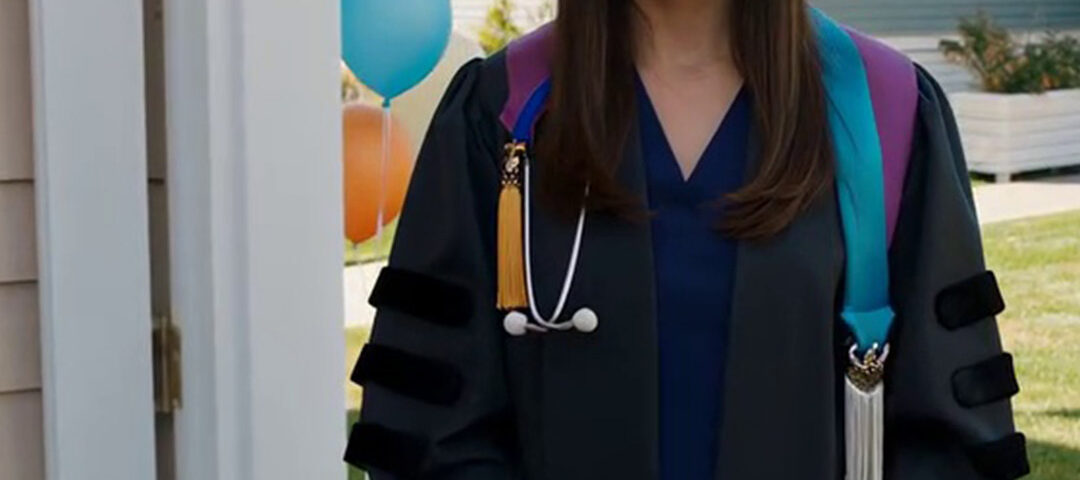
I still remember the exact shade of blue the sky was that morning—cloudless, brilliant, almost mocking in its perfection. May 17th, the day I was supposed to walk across a stage and receive my medical degree after eight grueling years of undergraduate studies and medical school combined. The day my entire family had known about for months, the day they chose to forget.
My name was Meredith Anne Callaway back then. Twenty-six years old, top 5% of my class at Johns Hopkins School of Medicine, and so naive that I actually believed blood meant something.
I had reserved twelve seats for my family in the auditorium. Twelve. My parents, Howard and Cecilia. My older brother, Grant, and his wife, Natalie. My younger sister, Paige. My grandmother, Dorothy. My aunt, Florence, and uncle, Raymond. My cousins, Trevor and Bridget. And two extra seats because I genuinely thought someone might want to bring a friend or partner I didn’t know about.
The ceremony started at ten in the morning. By 9:45, I was standing outside the auditorium in my regalia, my phone pressed against my ear, listening to it ring and ring and ring. Nobody answered. Not my mother, not my father, not Grant, not Paige. I called eleven times in total. Eleven times I heard automated voicemail greetings from people who were supposed to love me unconditionally.
Dr. Whitfield, my faculty adviser, found me crying in the bathroom twenty minutes before I was supposed to line up with my cohort.
“Meredith, what’s wrong?” she asked, her voice soft with concern.
I couldn’t even form words. I just showed her my phone, the call log, the desperate texts I’d sent that had all gone unanswered. She handed me tissues and told me something I would carry with me for years.
“The people who show up for you are your real family. Sometimes that has nothing to do with genetics.”
I walked across that stage alone. When they called my name, when they announced that I had graduated with distinction and would be starting my residency in general surgery at Massachusetts General Hospital, there was no eruption of cheers from a designated family section. Just polite applause from strangers and the hollow echo of my own footsteps.
The dean shook my hand and leaned in slightly.
“Congratulations, Dr. Callaway. You should be immensely proud.”
I managed to smile, to nod, to move through the motions like a person who hadn’t just been gutted by her own family. Muscle memory carried me across that stage and back to my seat where I sat through the remaining two hours of ceremony feeling absolutely nothing at all.
Afterward, my classmates were swarmed by relatives clutching flowers and balloons. Marcus Chen, who had barely scraped by academically, had seventeen people there for him. Seventeen. His grandmother had flown in from Taiwan. Meanwhile, I stood by myself near the exit, still refreshing my phone, still hoping for some explanation that would make sense.
The explanation came three hours later, when I finally drove the forty-five minutes to my parents’ house in Bethesda.
In my car, before driving to Bethesda, I had sat in the parking garage and allowed myself exactly five minutes to fall apart. I sobbed until my chest ached and my eyes swelled nearly shut. Then I fixed my makeup in the rearview mirror, straightened my doctoral hood, and drove toward a confrontation I knew would change everything.
The thing about denial is that it requires constant maintenance. You have to actively choose every single day not to see the patterns that define your life. Driving down those familiar streets, passing landmarks from a childhood spent perpetually in someone else’s shadow, I felt my denial cracking apart like ice in spring.
There was the elementary school where I’d won the spelling bee in fourth grade, a trophy my mother had accidentally thrown away during a cleaning purge. Two blocks further, the orthodontist’s office where I’d gotten my braces off the same day Paige had a meltdown about her first boyfriend dumping her, which meant my milestone went entirely unacknowledged. The community center where I performed in a piano recital at age twelve, playing a Chopin nocturne I’d practiced for six months, while my parents texted in the audience about Paige’s latest drama with her friend group.
Twenty-six years of being an afterthought. Twenty-six years of accepting scraps of attention and convincing myself they were feasts. Twenty-six years of believing that if I just achieved enough, excelled enough, proved myself enough, someone would finally turn around and see me.
When I pulled up to my parents’ house, every car I had expected to see parked outside the auditorium was in the driveway.
I found them in the backyard. All of them. Every single person I had invited to my graduation was there, gathered around a decorated table celebrating my sister Paige’s engagement to her boyfriend, Mitchell. An engagement that had apparently happened the night before. An engagement that somehow superseded the most important academic achievement of my entire life.
“Meredith.”
My mother spotted me first, her champagne glass raised mid-toast.
“You’re here. Come celebrate with us. Paige is getting married.”
I stood at the edge of the patio, still wearing my graduation regalia because I hadn’t even gone home to change. The doctoral hood around my shoulders suddenly felt like a costume, something ridiculous and out of place at this impromptu engagement party that had stolen my day.
“My graduation was today.”
The words came out flat, emotionless. I watched the realization flicker across various faces. My father’s expression shifted almost imperceptibly before settling back into neutral. Grant took a long sip of his beer. Paige actually rolled her eyes.
“Oh, honey.”
My mother set down her glass and walked toward me with that patronizing smile I knew so well.
“We were going to call you. Mitchell proposed last night completely out of nowhere, and Paige wanted everyone here this morning to celebrate. We figured you’d understand. Graduation ceremonies are so long and boring anyway, and it’s not like you needed us there. You’re always so independent.”
I looked around at my family, at the streamers and the cake and the champagne bottles, at my grandmother who avoided my eyes, at my aunt Florence who suddenly became very interested in her manicure, at Grant, who shrugged when I caught his gaze as if to say, “What did you expect?”Family
And the thing was, some part of me had expected exactly this, because this wasn’t the first time Paige had taken precedence. It wasn’t even the hundredth time.
When I was fourteen and won the state science fair, we celebrated by going to Paige’s dance recital. When I got accepted to Johns Hopkins with a full scholarship, my parents threw Paige’s sweet sixteen party the same weekend and told me we’d celebrate my acceptance later. Later never came. When I completed my MCAT with a score in the 98th percentile, Paige announced she was changing her major for the third time. And somehow that dominated dinner conversation for weeks.
My entire life, I had been the responsible one, the overachiever, the daughter who never caused problems. And my entire life that had meant I was invisible. Paige was dramatic, demanding, the kind of person who sucked all the oxygen out of every room. My parents had spent so many years managing her moods and catering to her whims that they had simply forgotten I existed.
But standing there on that patio, watching my family toast to Paige’s engagement while I wore the physical evidence of eight years of sacrifice around my neck, something inside me finally broke.
“You’re right,” I said quietly. “I am independent. Thank you for reminding me.”
I turned around and walked back to my car. My mother called after me, something about being dramatic and ruining Paige’s special moment, but I didn’t stop. I didn’t look back.
I drove straight to the courthouse the next morning. The process of legally changing your name is surprisingly mundane. Forms, fees, a court date, a judge who barely looked up from his paperwork before approving my petition. Within six weeks, Meredith Anne Callaway ceased to exist. In her place stood Dr. Meredith Anne Walker, a name I had chosen deliberately. Walker: someone who walks away, someone who keeps moving.
I had already planned to relocate to Boston for my residency. Now that move became a complete reinvention. I changed my phone number, deleted all social media, forwarded my mail to a P.O. box, and left no forwarding address. I told exactly one person from my old life about the change, Dr. Whitfield, who had been more of a mother to me in four years than Cecilia Callaway had been in twenty-six.
“Are you sure about this?” she asked when I explained my decision.
“They didn’t notice me when I was there,” I said. “Let’s see how long it takes them to notice I’m gone.”
The answer was three months.
I received an email to my professional address in August, just as my emergency medicine residency was consuming every waking hour of my life. The sender was Grant, and the message was brief.
“Mom says you’re not returning her calls. She’s upset. Can you just apologize so we can move on? Paige’s wedding planning is stressful enough without your drama.”
I deleted it without responding.
The next communication came in October—a voicemail on the hospital’s general line from my father.
“Meredith, this silent treatment is ridiculous. Your mother is worried sick. You need to call home immediately.”
I had the administrative assistant inform him that no one by the name of Meredith Callaway worked at that hospital. It wasn’t even a lie.
By December, my old life felt like a fever dream. I was Dr. Walker now, a resident who worked ninety-hour weeks and saved lives and went home to a small apartment in Cambridge where no one’s needs took precedence over my own. I spent Christmas with three other residents who also had complicated family situations. We ate Thai food and watched terrible movies and laughed until our sides hurt. It was the best holiday I’d ever had.Family
The silence from Maryland continued for almost two years. I built an entirely new existence in that time—friends who chose me not out of obligation but because they genuinely enjoyed my company. A career that challenged me intellectually and fulfilled me emotionally. A sense of self that wasn’t defined by being the responsible daughter, the overlooked sister, the family afterthought.
And then, on a random Tuesday in March of my third year of residency, my grandmother Dorothy died.
I found out through a Google alert I’d set up years earlier, a passive way to monitor whether anyone from my former life had tried to find me. The obituary was short, listing survivors, including granddaughters Paige Callaway Mitchell and Meredith Callaway. Except Meredith Callaway no longer existed, and no one from my family had tried to inform me.
I considered going to the funeral. For about an hour, I sat with that possibility, examining it from every angle. My grandmother had been kind to me in her quiet way. She’d given me money for textbooks when I started medical school, money she asked me not to tell my parents about. She’d come to my white coat ceremony when no one else had bothered.
But she’d also been there that day. She’d been at Paige’s engagement party, sitting in a chair that should have been occupied at my graduation. She’d made a choice just like everyone else.
I didn’t go.
Two weeks after the funeral, a private investigator showed up at Massachusetts General asking about a Dr. Meredith Callaway. I know this because my colleague, Dr. Kesha Warren, mentioned it during lunch, laughing about how some poor woman’s family had apparently hired a PI to track her down.
“Wild, right?” Kesha said, biting into her sandwich. “Imagine being so estranged that your family has to hire a professional to find you.”
“Wild,” I agreed, and quietly began taking extra precautions about my personal information.
The PI never found Dr. Meredith Walker. The investigator had been searching through medical licensing databases and alumni records under my old name, never thinking to cross-reference physical descriptions or graduation years with newly licensed physicians. By the time my parents thought to try a different approach, years had passed and the trail had gone cold.
My parents finally managed to locate me eight months later through a medical journal article that listed my name and hospital affiliation. They showed up unannounced on a Saturday afternoon, standing in the lobby of my apartment building when I returned from a twelve-hour shift.
My mother had aged significantly in the three years since I’d last seen her. Deep stress lines framed her mouth. My father looked smaller somehow, diminished. For a split second, I felt something twist in my chest that might have been sympathy.
“Your doorman wouldn’t let us up,” my mother said, her voice carrying that familiar note of accusation. “We’ve been waiting for two hours.”
“Good doorman.”
Cecilia flinched as if I’d slapped her.
“Meredith, this has gone on long enough. We’re your parents. You can’t just disappear.”
“Actually, I can. And it’s Dr. Walker now.”
My father’s face reddened.
“What kind of nonsense is that? Your name is Callaway. Our name.”
“Not anymore. I had it legally changed shortly after my graduation. You remember my graduation, right? The one you skipped for an engagement party.”
The silence that followed was almost satisfying. Almost. Mostly I just felt tired—the exhaustion of a long shift compounded by the emotional labor of confronting a past I’d worked so hard to leave behind.
“We didn’t skip it,” my mother finally said. “We just… we had a conflict. Paige needed us that day, and we made a judgment call. You’ve always been so self-sufficient, Meredith. We knew you’d be fine.”
“Dr. Walker,” I corrected automatically. “And you’re right. I was fine. I am fine. Better than fine, actually, now that I’m not constantly being overlooked by people who are supposed to love me.”
“We do love you,” my father interjected, though he couldn’t quite meet my eyes. “You’re our daughter.”
“I was your daughter for twenty-six years. I was your daughter who got straight A’s and never caused trouble and worked three jobs to help pay for my living expenses because you spent my college savings on Paige’s car after she wrecked hers for the second time. I was your daughter who sat in waiting rooms while you attended Paige’s therapy appointments and Paige’s college visits and Paige’s everything. I was your daughter who watched you choose her every single time, in every single situation, without fail.”
My voice remained steady throughout this speech. I had rehearsed it enough times in my head during sleepless nights and long commutes and quiet moments when the past crept up on me uninvited.
“That’s not fair,” my mother protested. “Paige had struggles. She needed more support. You were always so capable.”
“And how exactly was I supposed to be anything else? What would have happened if I’d had struggles? If I’d needed more support, would you have suddenly developed the capacity to see me? Or would you have just sent me to my room while you dealt with Paige’s latest crisis?”
Neither of them had an answer for that.
“I wanted you at my graduation,” I continued, my voice dropping lower. “Not because I needed validation, not because I wasn’t independent enough to handle it alone. I wanted you there because it mattered to me and I thought I mattered to you. But I didn’t. I never did. And the sooner I accepted that, the sooner I could stop waiting for something that was never going to happen.”
My mother started crying. Big, dramatic tears that reminded me uncomfortably of Paige. My father put his arm around her, murmuring comfort. And I watched them form a unit that had never included me.
“We want you to come home,” my father said finally. “For Easter. Paige is pregnant and she wants the whole family there.”Family
I laughed. I couldn’t help it. After everything, after showing up unannounced and confronting me with three years of abandoned anger, their pitch was still about Paige.
“Tell Paige congratulations, and tell her she’ll have to celebrate without me, same as I celebrated my graduation without you.”
My mother grabbed my arm as I tried to move past her. Her grip was surprisingly strong, desperate in a way I’d never experienced from her before.
“Meredith, please. We’re your parents. Doesn’t that mean anything to you?”
I looked down at her hand on my arm, at the manicured nails and the wedding ring she’d worn for thirty-five years. At the physical manifestation of a connection I’d spent my whole life trying to feel.
“It meant everything to me,” I said quietly. “That was the problem. It meant everything to me and almost nothing to you.”
My father stepped forward, positioning himself between my mother and me in that familiar peacekeeping stance I knew so well.
“Let’s all calm down. We can talk about this like adults.”
“We’re not going to talk about anything. You had twenty-six years to talk to me, to see me, to treat me like I mattered even a fraction as much as Paige. You chose not to, and now I’m choosing not to pretend that’s okay anymore.”
“This is cruel,” my mother whispered, tears streaming down her face. “You’re being deliberately cruel.”
The accusation landed exactly where she intended it to, in the soft place where my guilt lived. For a moment, I wavered. These were my parents. They had raised me, fed me, kept a roof over my head. Wasn’t that worth something? Didn’t I owe them basic respect, basic consideration, basic forgiveness?
But then I remembered sitting alone in that auditorium. I remembered the silence where their cheers should have been. I remembered every recital and awards ceremony and milestone they’d missed, every time they’d chosen Paige’s chaos over my achievements, every moment I’d made myself smaller to avoid being a burden.
“You taught me that being cruel to someone meant not showing up for them when it mattered,” I replied. “I learned that lesson from experts.”
I walked past them, used my key card to access the elevator, and rode up to my apartment alone. Through the lobby window, I could see my mother gesturing wildly, my father trying to calm her down. Neither of them looked up at the building, trying to spot which window might be mine.
They never were very good at looking for me.
Spring turned to summer, and my residency continued its relentless demands. I finished my fifth year at the top of my cohort and accepted a fellowship in trauma and critical care surgery at Boston Medical Center. My career was flourishing in ways I’d never dared to imagine.
My personal life flourished, too. I’d been dating a medical device engineer named Victor for about a year—a kind and thoughtful man who listened when I talked and showed up when he said he would. Simple things, really, the bare minimum of human decency. But after a lifetime of being overlooked, Victor’s consistent attention felt revolutionary.
He proposed on a hiking trail in New Hampshire, pulling out a ring at the summit of Mount Lafayette while I was sweating through my shirt and desperately needed water.
“Your timing is terrible,” I told him, laughing through tears.
“I know. That’s why I brought champagne.”
He produced a small bottle from his backpack, only slightly warm from the hike.
“I figure if we’re going to do this, we should start as we mean to go on. Imperfect, but trying.”
We got married that October in a small ceremony at a vineyard outside of Boston. I invited twenty-eight people, all of them friends I’d made since becoming Dr. Walker. Victor’s parents flew in from California, and his mother hugged me so hard I thought my ribs might crack.
“Thank you for making our son so happy,” she whispered.
I didn’t invite anyone from Maryland.
Paige found out about my wedding through Facebook, of all things. One of Victor’s cousins had tagged a photo from the reception, and through some algorithmic coincidence, it had appeared on my sister’s feed despite our lack of any connection.
The email she sent was classic Paige, equal parts victimhood and accusation.
“I can’t believe you got married without telling us. Mom cried for three days. Dad barely speaks anymore. Grandma Dorothy would be so disappointed in you. You’ve torn this family apart, Meredith. And for what? Because we missed one graduation. That was years ago. Normal people forgive and move on. You need serious psychological help if you’re still holding on to something so petty.”Family
I read the email twice, then archived it without responding. There was nothing to say. Paige would never understand that she was the symptom, not the disease. The real problem was a family system that had taught me from birth that my needs didn’t matter, that my achievements were inconveniences, that my presence was optional.
Victor found me in our home office that night, staring at my laptop screen.
“Everything okay?”
“My sister sent an email about the wedding. She’s upset we didn’t invite them.”
He sat down beside me, taking my hand.
“Do you want to talk about it?”
“Not really. I just find it fascinating that even now, even after everything, she still thinks this is about one graduation. She genuinely doesn’t see the pattern. None of them do.”
“Would it matter if they did?”
I considered the question seriously. If my parents showed up tomorrow with genuine remorse, with acknowledgment of decades of neglect, would it change anything? Could it?
“Probably not,” I admitted. “The damage is done. And honestly, my life is better now than it ever was when they were in it. That sounds harsh, but it’s true.”
Victor squeezed my hand.
“Then maybe focus on that. The life you’ve built. The people who actually show up for you.”
He was right. He usually was.
Two more years passed. I completed my fellowship and accepted an attending position in trauma surgery at Brigham and Women’s Hospital. Victor’s company went public, making us unexpectedly wealthy in a way that still felt surreal. We bought a house in Brookline with a garden, a home office, and a spare bedroom that we started referring to as the future nursery.
The letter arrived on a Thursday in November on official stationery from a law firm in Bethesda. My father had died. Heart attack, sudden and massive, in the parking lot of a grocery store. He was sixty-seven years old.
The letter was from Howard Callaway’s attorney, informing me that I had been named in his will and requesting my attendance at the reading. It was addressed to Dr. Meredith Walker at my hospital’s administrative office, which meant someone had done their research.
I sat with that letter for a long time. My father and I had never been close, even before the estrangement. He was a quiet man, overshadowed by my mother’s personality and overwhelmed by Paige’s demands. In my memories, he existed mostly in the background, a presence rather than a participant. He’d never actively hurt me the way my mother had, but his passive acceptance of my invisibility was its own kind of wound.
And now he was gone, and I would never have the chance to confront him, to demand answers, to force him to see what his silence had caused.
Victor found me crying in the garden an hour later, the letter crumpled in my fist.
“Your father?” he asked.
I nodded, unable to speak.
“Do you want to go to the funeral?”
“No.” The word came out hoarse but certain. “I don’t want to see any of them. I don’t want to pretend to grieve with people who never grieved my absence.”
“What about the will reading?”
That gave me pause.
“I don’t know. I wasn’t expecting to be included. We’ve been estranged for five years. Maybe he felt guilty. Maybe this was his way of making amends.”
I thought about my father, about his avoidance and his silence and his endless capitulation to everyone else’s needs. Making amends would have required courage he never possessed. But leaving something in a will, a gesture that couldn’t be contested or argued with, that took only the courage of knowing he wouldn’t be alive to face the consequences. That sounded exactly like Howard Callaway.
The will reading took place two weeks later in a conference room that smelled like old coffee and new carpet. I arrived early, deliberately, and sat in a corner seat that gave me a view of the door. My mother entered first, leaning heavily on Grant’s arm. She looked terrible, hollowed out by grief in a way that made her seem decades older. Paige came next, visibly pregnant and supported by her husband, Mitchell.
None of them noticed me immediately. Why would they? They weren’t looking for me.
The attorney cleared his throat.
“Now that everyone is present, we can begin.”
“Everyone?” My mother’s head swiveled, scanning the room. Her eyes found me and her face went through a complicated series of expressions—shock, hope, anger, grief.
“Meredith.”
“Dr. Walker,” I corrected for what felt like the thousandth time. “You came.”
She started toward me, arms outstretched, and I held up a hand to stop her.
“I came for the reading. Nothing else.”
The attorney intervened smoothly, directing everyone to their seats.
What followed was exactly what I expected. The house went to my mother along with the bulk of the estate. Grant received my father’s car collection and some investment accounts. Paige got jewelry, furniture, and a substantial cash gift to help with the new baby.
And then the attorney turned to me.
“To my daughter Meredith, I leave the beach house in Rehoboth and its contents, along with the attached letter to be read privately.”
The silence that followed was absolute. Even Paige’s perpetual motion stilled. My mother’s mouth opened and closed several times before she managed to speak.
“That’s impossible. Howard wouldn’t… That house was supposed to go to the grandchildren. We discussed it.”
“The will is quite clear, Mrs. Callaway. The Rehoboth property is bequeathed to Dr. Meredith Walker, formerly Meredith Callaway, with no conditions or restrictions.”
The beach house. I remembered it from childhood, before Paige’s needs consumed everything. When my father would take me there alone sometimes, and we’d fish off the pier in companionable silence. Those weekends had stopped when I was about eight, around the time Paige started her first round of therapy. I hadn’t thought about them in years.
The attorney handed me a sealed envelope, cream-colored and heavy. My father’s handwriting spelled out my name on the front, both names: Meredith Callaway Walker. I tucked it into my purse without opening it.
“This is ridiculous,” Paige burst out. “She abandoned this family. She didn’t come to Dad’s funeral. She doesn’t deserve anything.”Family
“You’re right,” I said, standing up and slinging my purse over my shoulder. “I didn’t come to Dad’s funeral. Just like none of you came to my graduation. Just like none of you came to my wedding. Just like none of you ever came for me, for anything, ever. The difference is I stopped expecting you to show up a long time ago. You apparently still had expectations of me. That seems like a personal problem.”
I walked out of the conference room without looking back. Behind me, I could hear Paige’s outraged protests and my mother’s weeping and Grant’s low placating murmur—the sounds of a family I no longer belonged to, dealing with consequences I no longer had to manage.
I read the letter in my car, parked in the law firm’s lot, because I couldn’t wait until I got home.
“Meredith,” it began. “If you’re reading this, I’m gone, and I never found the courage to say these things to your face. That’s the story of my life, I suppose. Cowardice dressed up as peacekeeping.
“I knew what your mother was doing, how she prioritized Paige, how she made you invisible. I told myself I was helping by not making waves, by keeping the peace, by letting things slide. But I wasn’t helping. I was abandoning you, just as surely as if I’d walked out the door.
“The day of your graduation, I wanted to go. I woke up that morning planning to go. But your mother was so insistent, so convinced that Paige needed us, and I told myself you’d understand. You always understood. That was the problem, wasn’t it? You understood too much, forgave too easily, expected too little.
“The beach house is yours because those weekends were the only time I ever felt like I was being a real father to you. I should have fought harder to keep them. I should have fought harder for you in general, but I didn’t. And now all I can do is leave you a building full of memories and a letter full of inadequate apologies.
“I don’t expect your forgiveness. I don’t deserve it. But I want you to know that I saw you even when it seemed like I didn’t. I was proud of you even when I failed to show it. And I loved you even when my actions suggested otherwise.
“Be happy, Meredith. Build a life full of people who show up for you. You deserve nothing less.
“Dad.”
I sat in that parking lot for a long time, crying in a way I hadn’t allowed myself to cry in years. The letter changed nothing, really. My father was still gone, my family was still broken, and no number of apologetic words could undo decades of neglect. But it meant something, knowing he had seen me, knowing that somewhere underneath all his passivity and fear, he had understood exactly what was happening and felt guilty about it.Family
It wasn’t enough. It would never be enough. But it was something.
The beach house became my sanctuary. Victor and I spent weekends there, renovating slowly, replacing painful memories with new ones. We stripped the dated wallpaper from the master bedroom and painted it a soft sage green. We replaced the worn deck boards and added comfortable outdoor furniture where I could sit with my morning coffee and watch the ocean shift through its moods.
One afternoon, while clearing out the garage, I found a box of old photographs my father had kept hidden behind rusted gardening equipment. Most were from before I was born, images of my parents young and hopeful and unburdened by the family they would eventually create. But near the bottom, I discovered a small envelope containing pictures from those fishing weekends we’d shared, just the two of us.Family
There I was at seven years old, holding up a tiny flounder with an expression of pure triumph. Another showed me at eight, asleep in a deck chair with a book fallen across my chest. A third captured my father and me on the pier at sunset, silhouettes against an orange sky, standing close together in a way I’d forgotten we ever had.
He’d kept these separate from the family albums, hidden almost, as if preserving a version of our relationship that had been allowed to exist only in secret, away from the gravitational pull of my mother’s favoritism and Paige’s endless needs.
I cried over those photographs in a way I hadn’t cried since reading his letter. The grief wasn’t just for my father or for what we’d lost, but for what we’d never been allowed to build. Somewhere inside that passive, avoidant man had been a father who loved me, who saw me, who wanted more for us than stolen weekends and silent apologies. But he’d never found the courage to fight for it, and neither had I.
Victor found me on the deck that evening, the photographs spread across the weathered table, tear tracks still drying on my cheeks.
“Tell me about them,” he said simply, settling into the chair beside me.
So I did. I told him about the fishing lessons and the quiet conversations and the way my father had seemed like a different person when it was just the two of us. I told him about the day those weekends stopped when Paige started therapy and my mother declared that we needed to be a unified family front, which somehow meant no more special time for the daughter who wasn’t struggling.
Victor listened without interrupting, without trying to fix anything, without offering platitudes about forgiveness or closure. When I finished, he picked up the photograph of us on the pier and studied it for a long moment.
“This is what Dorothy gets,” he said finally. “This version of you. The one who knows how to show up. The one who learned from absence what presence really means.”
It was exactly what I needed to hear.
Our daughter was born the following spring. A tiny, perfect person we named Dorothy, after my grandmother, who had once tried to show up for me even when she ultimately couldn’t.
My mother tried to reconnect when she heard about the baby. Cards, emails, even a phone call to my hospital that I declined to take. Paige sent a gift basket that I donated to a women’s shelter. Grant reached out exactly once, a brief message saying he hoped I was well, with no apology and no acknowledgment of anything that had passed between us.
I didn’t respond to any of it.
The first birthday card arrived when Dorothy was three months old, addressed to “Baby Girl Callaway-Walker,” as if my mother couldn’t quite bring herself to acknowledge either my married name or the name change that had preceded it. Inside was a check for $500 and a note written in my mother’s careful cursive.
“Every child deserves to know their grandmother. Please don’t punish her for our mistakes.”
I donated the check to a children’s hospital and threw the card away. The irony of my mother invoking punishment was not lost on me. This was a woman who had spent my entire childhood punishing me for the crime of being self-sufficient, who had withheld attention and affection and basic acknowledgment because I didn’t demand them loudly enough.
More cards followed. Birthdays, holidays, random Tuesdays when my mother apparently felt moved to reach out. Each one went unopened into a box I kept in the back of my closet—a growing archive of “too little, too late” that I couldn’t quite bring myself to destroy.
Victor asked me once why I kept them.
“Evidence,” I said, though I wasn’t entirely sure what I meant. Evidence that they had tried, perhaps. Evidence that their attempts were inadequate. Evidence that I wasn’t imagining the decades of neglect that had led to this arrangement, that there really had been something worth walking away from.
Or maybe I kept them because some small wounded part of me still hoped to open one and find the words I’d waited my whole life to hear. Not “we miss you” or “please forgive us” or “think of your daughter,” but something simpler and more fundamental: We see how we failed you. We understand why you left. You were right to protect yourself.
Those words never came. Every card, when I finally worked up the courage to read them years later, contained some variation of the same theme—their pain, their confusion, their bewilderment at my cruelty. Never once did they acknowledge their own role in creating the distance between us. Never once did they demonstrate any understanding of what they had done or why I might have needed to escape it.
Some people would call that cold, unforgiving. A therapist I saw briefly after my father’s death suggested I was cutting off my nose to spite my face, that I was punishing myself by refusing reconciliation. But she didn’t understand. Reconciliation requires acknowledgment. It requires the people who hurt you to actually recognize what they did. My family had never shown any indication that they understood the depth of their betrayal. To them, I was still being dramatic over one graduation, still holding a petty grudge, still the unreasonable one in a narrative where they were blameless victims of my inexplicable cruelty.Family
Walking away wasn’t punishment. It was protection. It was choosing myself after a lifetime of being unchosen.
Dorothy took her first steps in the beach house, on the same pier where my father once taught me to fish. Victor caught it on video, and I watched it over and over that night, marveling at this new life we’d created, this family that actually functioned like one.
My mother died four years after my father, in a nursing home I paid for anonymously through an attorney. I never visited, but I made sure she had good care, a private room, everything she needed. It was more than she’d done for me, and perhaps that was petty, but it felt right. She was still my mother, even if she’d never been very good at it.
Paige contested the beach house in probate after my mother’s death, claiming our father hadn’t been in his right mind. The challenge failed spectacularly, and our relationship, such as it was, ended completely.
I am forty-four now, a department head at a major hospital, married to a wonderful man, mother to a daughter who knows without question that she is seen and loved and valued. My life is full in ways I never imagined possible when I was a lonely medical student waiting for a family that never came.
Sometimes I wonder what would have happened if I’d stayed. If I’d swallowed my pride after that graduation, accepted my invisibility, continued being the responsible daughter who expected nothing and received less, would I have this career, this marriage, this bone-deep contentment?
I don’t think so. I think I would have shrunk smaller and smaller, trying to fit into a space that was never designed to hold me, until there was nothing left but resentment and regret.
Changing my name was the most impulsive decision I ever made. It was born from hurt and anger and a desperate need to become someone who couldn’t be abandoned by the Callaways because she simply wasn’t one of them anymore. But it became something else entirely. It became permission to build a life on my own terms. Permission to define family by choice rather than blood. Permission to stop waiting for people who were never going to show up.
My daughter asked me recently why she has a different last name than some of her cousins—Victor’s nieces and nephews.
I told her the truth in terms a nine-year-old could understand—that I had a family once who forgot how to love me properly, and I had to go find people who would remember.
“But what if they learned how?” she asked with the earnest optimism of childhood. “What if they figured it out and wanted you back?”
I thought about that question for a long time before answering.
“Some lessons come too late, sweetheart. And some doors, once closed, are meant to stay that way. Not because we’re being mean, but because opening them again would hurt too much.”
She accepted this with the easy wisdom children sometimes possess. And I accepted it too—finally, completely—in a way I hadn’t quite managed until that moment.
They forgot me on purpose. So I forgot them right back.
And in doing so, I found myself.
That decision changed everything. It changed who I am, where I live, what I answer to. It changed my understanding of family and belonging and love. But mostly, it changed my answer to a question I’d been asking my whole life without realizing it.Family
What happens if I stop waiting for people who will never choose me?
The answer, it turns out, is everything.