Cruel words do not always arrive in a shout. Sometimes they come quietly, spoken with confidence, as if the speaker is certain they hold all the power in the room. At seventy-four years old, I had learned that lesson many times. Still, nothing quite prepares you for the moment when someone you helped build a life suddenly decides you no longer belong in it.
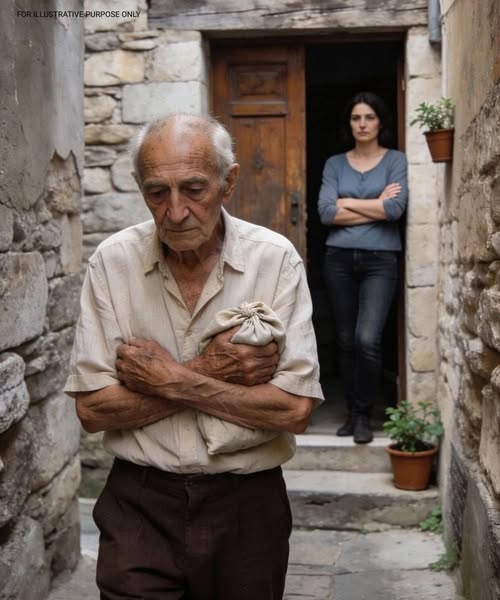
I had been living under my son’s roof for three years. Or at least, that is what I believed. That illusion shattered on a gray afternoon when my daughter-in-law, Cristina, stood in the doorway of my small bedroom and made it clear that my time there was over.
She crossed her arms tightly, her expression hard and resolved. There was no hesitation in her voice, no attempt at kindness.
“It’s settled,” she said. “You need to leave. Today. This is my home, and I’m done supporting you.”
The words stung, not because they were loud, but because they erased years of quiet contribution in a single breath.
Three Years Reduced to Nothing
For three years, that modest bedroom had been my refuge. I moved in after my wife, Rosa, passed away. My son David insisted it was the right thing to do.
“You shouldn’t be alone,” he told me back then. “We’re family.”
Family. It is a word that promises safety. Until it doesn’t.
During those years, I did not sit idle. I paid what I could from my modest pension. I walked my grandchildren home from school, cooked meals, repaired doors, fixed plumbing, and kept the house standing with hands shaped by decades of carpentry work. Every loose tile and creaking board had known my effort.
Yet there Cristina stood, speaking as though I had been nothing more than an inconvenience.
“You’re taking up space,” she continued. “David needs a home office. We need room for our children. We can’t keep carrying you.”
I asked quietly whether my son knew about this decision.
“He agrees,” she said without pause. “We talked. This is best for our family.”
That was the moment something inside me grew very still. Not angry. Clear.
Choosing Calm Over Confrontation
At my age, I knew better than to argue with someone who had already decided my value. Raising my voice would not restore respect. Begging would not bring dignity.
“I understand,” I said calmly.
She blinked, clearly unsettled by my lack of resistance. “That’s it? You understand?”
“Yes,” I replied. “I’ll leave.”
Her relief quickly turned sharp. “You have until tomorrow.”
I asked for more time, just a week to find a place. She refused. Then she made it clear she was willing to involve authorities if I did not comply.
That was when I realized exactly who I was dealing with.
Before she stormed away, I added one final sentence, spoken gently.
“Tomorrow,” I said, “a delivery will arrive at your door.”
She scoffed, muttered something about my age catching up with me, and left.
A Life Packed Into Boxes
That evening, I packed everything I owned. Clothes worn thin by time. Old tools I could not bring myself to part with. Photographs of Rosa, smiling in better days. A lifetime condensed into two suitcases and a few boxes.
My grandson knocked softly on my door.
“Grandpa,” he whispered, eyes wide. “Mom says you’re leaving.”
I knelt beside him and assured him he had done nothing wrong. When he asked if he would see me again, my heart tightened. I promised yes, even though I feared that promise might not be honored by others.
The next morning, a moving truck arrived. Cristina watched from the doorway, her satisfaction barely hidden. David appeared briefly, uncomfortable and distant.
“This is for the best,” he said, though he would not meet my eyes.
“For whom?” I asked.
He had no answer.
I moved into a small studio apartment I could barely afford. It smelled damp and felt lonely, but it was mine. Independence, I reminded myself, has a quiet dignity.
The Delivery That Changed Everything
That afternoon, my phone rang.
“The documents have been delivered,” said Mr. Ruiz, the attorney I had contacted months earlier. “They were received and signed.”
“Thank you,” I replied. “Proceed as planned.”
Less than an hour later, my phone lit up with missed calls. I did not answer.
Eventually, I listened to the first voicemail. Cristina’s voice was frantic, no longer sharp with confidence.
Later that evening, David finally reached me.
“What are these papers?” he demanded. “They say you own the house. That we have to leave.”
“Yes,” I said evenly. “That information is correct.”
There was stunned silence on the other end.
I explained calmly. Four years earlier, after Rosa passed, I had used her life insurance to purchase the house outright. I never announced it. I rented it to David and Cristina at well below market value, believing I was protecting both them and myself.
“You bought it?” David asked, his voice shaking.
“Yes. And I gave you stability, not control.”
He accused me of deception. I reminded him that forcing an elderly parent out with one day’s notice was not honesty either.
I gave them thirty days to relocate. Thirty times the courtesy I had been shown.
When Words Return to Their Speaker
Cristina appeared at my door less than a week later. The confidence was gone. She cried. She apologized. She begged.
I listened quietly.
Then I reminded her of the way she had spoken to me. The way she dismissed my humanity. I told her I wished her no harm, but I would not undo what was already set in motion.
They moved out two weeks later.
I sold the house soon after, below market value. I used part of the money to support programs that help older adults avoid housing insecurity. I created a trust for my grandchildren, with clear conditions focused on education and respect.
Sometimes, late at night, I wonder if I was too firm.
Then I remember that afternoon in the doorway. The certainty in her voice. The ease with which she cast me aside.
And I understand something important.
Family is not defined by shared names or walls.
When respect is broken, consequences follow. Not out of revenge, but out of truth.
And truth, when delivered calmly, has a way of arriving right on time.