
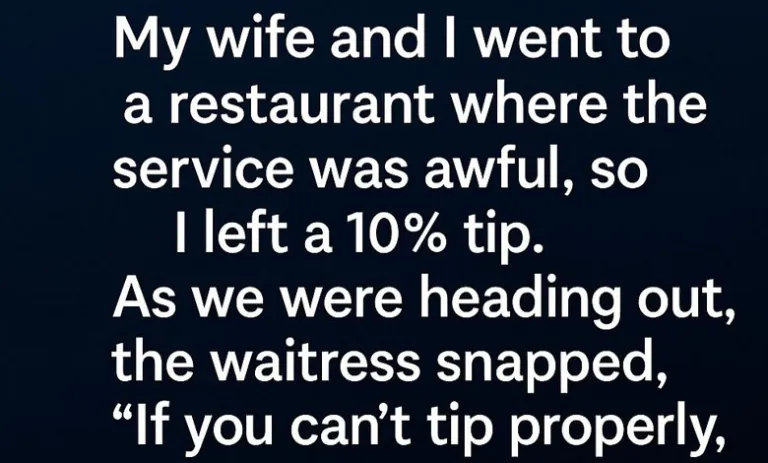
After a long day on the road, my wife and I stopped at a small restaurant just looking for a quiet meal. The food was fine, but the waitress seemed overwhelmed—slow, distracted, almost trembling. When the bill came, I left a modest ten-percent tip and headed for the door. That’s when her voice cut through the room: “If you can’t tip properly, don’t dine out!” My wife stiffened immediately, insisting I report her.
Instead, I went back inside and asked to speak with the manager. He braced for anger, but I told him something felt off—that the waitress didn’t seem rude so much as exhausted. His shoulders dropped as he explained she’d been covering double shifts while caring for a sick relative. The staff was barely holding things together. “Thank you for seeing that,” he said quietly. “Most people don’t.”
On my way out, I slipped a folded note and a larger tip into the jar. I didn’t wait for her reaction. My wife and I were just reaching the car when the waitress rushed out, tears streaking her cheeks. “I’m so sorry,” she whispered. “My mom’s in the hospital. I shouldn’t have snapped.” My wife touched her arm gently and said, “It’s okay. We all break sometimes.”
Driving home, my wife looked at me and said she thought I’d gone back to get the woman in trouble. I shook my head. “Sometimes people don’t need punishment,” I said. “They need grace.” And that night, in a worn-down restaurant with tired lights and tired souls, grace proved to be the most meaningful thing anyone served.