 72 views
 I was never the favorite child. Not even close.
My name is Devon. I’m thirty-one now, and for as long as I can remember, I’ve been the person in my family who never quite belonged. I wasn’t rebellious. I didn’t constantly argue with everyone. I was simply different. Quiet while everyone else was loud. Observant while they acted without thinking. I preferred books, art, and music, while my siblings preferred parties, attention, and competition. In a family that seemed to thrive on drama, I became little more than background noise.
I grew up in a mid-sized town where reputation seemed more important than reality. My parents, Linda and Ron, were well-liked. They smiled at church. Volunteered at school. Spoke constantly about sacrifice and family values. But inside our home, everything revolved around comparison. My older brother Jake was the golden child. Athletic. Popular. Confident. Somehow always right. My younger sister Emily was the baby of the family. The princess. She could make almost any mistake and still somehow end up as the victim. Then there was me. Devon. The quiet one. The odd one. The kid who spent far too much time drawing or listening to music.
I remember being ten years old at Jake’s birthday party. The backyard was covered in balloons and decorations. There was a rented karaoke machine. An inflatable obstacle course. Friends from school. Neighbors. Even a few teachers. I asked Mom if I could invite one friend. She looked at me as though I had asked to bring a wild animal into the house.
“This is Jake’s day. Let’s not make it about you.”
That sentence became almost a family motto. Let’s not make it about you.
I heard it when Emily had a graduation dinner and I didn’t. I heard different versions of it when I asked why I had been left out of a Christmas family photo.
“We thought you were busy.”
When I asked if I could display a few of my drawings at a craft fair where everyone was supporting Emily’s online business, I somehow became selfish again. Every time I tried to claim even a little space for myself, I was made to feel as though I was taking far too much.
The strange part was that my family wasn’t openly cruel most of the time. Somehow, that made it worse. There weren’t constant screaming fights. There were simply forgotten invitations. Half-hearted smiles. Polite indifference. Kindness that vanished the moment I genuinely needed something. Eventually, I stopped expecting much.
At eighteen, I moved out. There was no dramatic argument. No emotional farewell. I packed my belongings and took a bus to a state college two hours away. Jake was too busy organizing a fraternity trip. Emily barely looked up. Mom and Dad gave me a fifty-dollar Target gift card and joked that I shouldn’t spend all of it on snacks. I thanked them and left.
College wasn’t glamorous. But for the first time, I could breathe. I studied graphic design and worked at a bookstore café. Nobody there thought being quiet was strange. I made real friends. People who liked me without expecting anything in return. At first, I kept waiting for some hidden condition. There wasn’t one.
Then, when I was twenty, someone unexpected came back into my life. My uncle Ray. Ray was Dad’s older brother. Growing up, I barely knew him. He rarely attended family gatherings. He didn’t come for holidays. I remembered only fragments from childhood. His deep voice. Long walks. The faint scent of pipe tobacco. Then one day, I received a letter. An actual handwritten letter. Ray wrote that he had heard I was in college. He said he had always believed there was a quiet strength in me. Then he added that if I ever wanted to visit, his door was open.
He lived about three hours away in an old house near the coast. I went that weekend. His home looked like something frozen in another century. Books covered entire walls. Strange sculptures filled the corners. An old grand piano stood near the window. Ray wasn’t overly affectionate. But he was kind. We talked about books. Music. Art. He never asked me to explain why I was different from the rest of the family. He simply accepted me.
After that first visit, I started going once a month. Sometimes we hardly spoke. We would sit drinking tea while reading separate books. Other times, we debated philosophy for hours or watched old movies. Slowly, Ray became the kind of family I had always wished for.
Meanwhile, my actual family barely noticed. Emily got married. I wasn’t invited. I found out from someone who assumed I had been there. Jake had two children before I had even seen pictures of them. Mom and Dad moved to Florida without telling me. Two weeks later, I received a postcard.
“Settled in. Hope you’re well.”
And still, some stubborn part of me kept trying. I mailed birthday presents. Commented on their social-media posts. Answered whenever they called. I kept thinking that maybe I could eventually become easier for them to love. Maybe I was the problem. Maybe if I tried a little harder, things would change. But there are only so many times you can knock on a closed door before you finally stop.
The last time I saw my family before everything changed was at Mom’s sixtieth birthday. Ray actually encouraged me to go.
“People sometimes surprise you.”
So I drove six hours. Everyone was there. Jake. Emily. Their spouses. Their children. Relatives I hadn’t seen in years. Mom greeted me with an awkward half-hug.
“Oh wow. You actually came.”
Jake nodded at me and went right back to talking about his new car. Emily barely acknowledged me.
I spent most of the evening standing near the wall, pretending to look at photographs. At one point, I overheard Emily explaining me to someone.
“That’s Devon. He’s the artsy one, I guess. Kind of does his own thing.”
Apparently, that was my role in the family story. The strange artistic relative lingering at the edge. I left after two hours. Nobody noticed. Except Ray.
When I arrived at his house later, he was sitting on the porch with tea.
“So, family reunion go well?”
I laughed. For once, it wasn’t bitter. He handed me a mug. We sat together without saying much.
A year later, Ray died. And everything changed. The news arrived the same way our relationship had started. In a letter. His attorney, Franklin Pierce, informed me that Ray had passed peacefully in his sleep. The letter said Ray had spoken about me often. His final wishes were clear. I needed to contact the attorney.
I sat staring at that page for a long time. Ray hadn’t simply been my uncle. He had been the only person in my family who consistently made me feel seen. Losing him felt like losing the one safe place I had. A week later, I returned to his coastal home. Without Ray, the house felt empty. The old clock was silent. Dust drifted through the afternoon sunlight.
Franklin met me in the parlor. He explained that Ray had arranged everything months earlier. There would be a reading of the will. But there was something unusual about it. There was only one beneficiary. Me. I stared at him.
“Just me?”
He nodded.
“Your uncle was very clear. You were his only consistent visitor. His closest friend. And in his later years, the family member he trusted most.”
Then Franklin explained what Ray had left behind. Everything. The coastal house. A vintage car. His art collection. Rare books. Investment accounts. Several additional properties. Apartment buildings. Commercial real estate. Trust holdings. Altogether, Ray’s estate was worth more than eight million dollars. I could barely take it in. He had quietly built a fortune. And he had left every bit of it to me. Not Dad. Not Jake. Not Emily. Me.
There were a few conditions concerning the preservation of the historic property, but otherwise, Ray’s wishes were simple. I was his sole beneficiary. It didn’t take long for my family to suddenly remember that I existed.
Jake texted first.
“Hey bro. Heard about Uncle Ray. Crazy. We should catch up.”
I ignored it. Then Emily reached out for the first time in more than a year. She wrote about how much she supposedly remembered Ray. How sorry she was. How she had always thought he was “such a cool guy.” She even mentioned a childhood toy she claimed he had given her. I stared at the message. Emily had never visited Ray as an adult. Not once.
Then my parents found out. Dad called from a number I didn’t recognize. I let it go to voicemail. Then came a text in capital letters.
DEVON. CALL US. THIS IS IMPORTANT.
I ignored that too. Two days later, Mom emailed me. The subject line read: Let’s Talk, Devon.
She said everyone was having a hard time processing Ray’s will. She acknowledged that Ray and I had been close. Then came the real issue. They believed it was unfair that the rest of the family had received nothing. Dad was apparently especially hurt because Ray had been his brother. Mom suggested that we meet and talk about what would be “fair.” She assured me they weren’t asking for everything. Just enough to help the family. Then she ended with:
“After all, family is everything.”
I read that sentence three times. Then I laughed. Family is everything. This was the same woman who had barely acknowledged my graduation. The same mother who once told me my lack of social skills would probably hold me back in life. The same family that could forget to invite me to weddings but suddenly remembered my phone number when eight million dollars appeared. I didn’t respond.
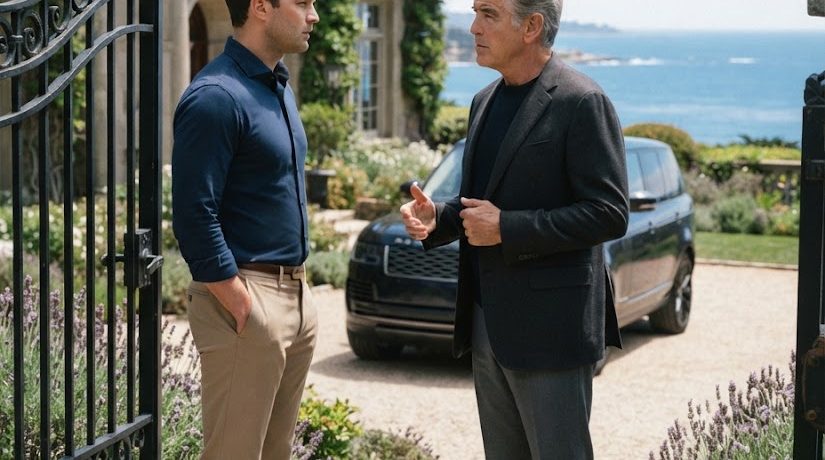
A week later, Dad showed up at Ray’s house. Uninvited. I was outside looking at the overgrown garden when a rental car pulled into the driveway. Dad stepped out. Older now. Gray hair. Slight limp. But the same rigid posture.
“Devon. Glad you’re here.”
I looked at him.
“This is my house. Of course I’m here.”
He gave me a strained smile. Then he got straight to the point. Mom was worried. Emily’s business was struggling. Jake had lost his job. Things had been difficult. But we were family. And family helped one another. I let him speak. Then he said,
“You’ve got all this now. The house. The money. You don’t need every dollar. We could use some help.”
I stared at him.
“So you want a handout.”
His expression tightened.
“That isn’t what I said.”
“It’s exactly what you said.”
Then I finally asked the question that had been sitting inside me for years.
“You ignored me for fifteen years. Why am I family now?”
Dad immediately became defensive.
“We never excluded you.”
I almost laughed.
“You chose to be different. You separated yourself.”
There it was. Their favorite version of the past. None of it had been their fault. According to them, I had done it to myself.
“Ray didn’t see it that way.”
That silenced him for a moment. He stayed for another ten minutes. He tried guilt. Then nostalgia. Then concern about how selfish I might appear if people discovered I was keeping so much money while my family was struggling. Eventually, I walked him back to the driveway. Then I closed the gate.
After that, the calls became constant. Mom left emotional messages. Emily switched between fake friendliness and guilt trips. Jake usually called late at night to tell me that money had changed me. Someone even created a group chat called: Caldwell Family Reconnect. The first message was a picture of Jake’s children.
“They miss Uncle Devon.”
I left the chat immediately.
Then extended relatives started showing up. A cousin I hadn’t spoken to since high school suddenly wanted funding for a music label. Another relative wanted me to co-sign a loan. It felt like I had turned into a walking ATM. They didn’t want me. They wanted access to what Ray had left behind.
Then Emily started changing the story publicly. She began tagging me in old family pictures.
“Miss these days.”
“Family is forever.”
Then she posted a lengthy tribute to Uncle Ray. She described imaginary walks they had taken along the beach. Deep conversations they had supposedly shared. How much he had supposedly inspired her creatively. At the end, she wrote:
“I wish I had visited more. I hope he knew how deeply I loved him.”
But Emily had never visited him. Not once. That was when I understood what they were doing. They were rewriting the past. Building a version where they had always been a loving family while I was now the bitter relative selfishly keeping Ray’s estate.
For most of my life, I had been erased from their version of the family story. Now that I possessed something valuable, suddenly everyone wanted to write me back into it. For the first time, I didn’t feel heartbroken. I felt clear.
Then Emily took things even further. A college friend called me one afternoon.
“Devon, have you seen the fundraiser?”
I hadn’t. Emily had launched a public crowdfunding campaign claiming Mom and Dad were at risk of losing their house. The campaign suggested that I had inherited millions while refusing to help my struggling parents.
There were pictures of their Florida home. Emotional captions. Comments about medical expenses. And one sentence made my stomach turn.
“After everything we’ve done for him, our son has abandoned us when we need him most.”
People were sharing it. Donating. Commenting about what a terrible son I must be.
For years, my family had acted as though I barely existed. Now they had turned me into a public villain because I refused to finance them. That was when I stopped defending myself. I didn’t need to make anything up. I had the truth. And Ray, without ever realizing it, had left behind the evidence.
While looking through his office one afternoon, I discovered an old folder tucked between books. Inside were letters. Bills. Medical records. Correspondence. Documents showing years of attempts by Ray to reconnect with Dad. Most had gone unanswered. One handwritten letter especially stood out.
Ray had written it after discovering he had heart disease. He told Dad he didn’t need money. He didn’t need anything complicated. He simply wanted to see his brother again. Dad never went. There were also records showing that years earlier, Ray had financially helped Dad. Money that had never been repaid.
There were photographs of Ray and me together. Birthdays. Holidays. Ordinary afternoons. Drawings I had made for him that were still hanging on the walls. I copied everything. But I didn’t publish it. Not yet.
Instead, I met with Franklin again. I told him about the fundraiser and the claims my family was making. He reviewed the evidence. Then he told me something else about Ray’s estate that I hadn’t completely understood.
Several of the apartment buildings weren’t merely investments. Ray had quietly managed them through a nonprofit housing organization. The program provided reduced-cost housing for veterans, elderly residents, and artists. Ray had also funded scholarships and coastal preservation projects. And now I was the chairman.
That changed the way I saw everything. Ray hadn’t simply left me money. He had left me responsibility. A community legacy. Something worth protecting. My family wanted to turn his estate into a private payout for relatives. Ray had spent years creating something much bigger than that.
So I decided the best response wasn’t revenge. It was making the truth visible. I contacted a local newspaper. I didn’t pitch a story about family drama. I pitched Ray. The article focused on his charitable work and how I planned to continue it. There was a photograph of me standing inside his study, surrounded by books. I talked about the nonprofit housing. Scholarships. The importance of protecting his estate. I didn’t mention my parents. Or Jake. Or Emily. I didn’t have to.
Then I created a simple website dedicated to documenting Ray’s legacy. Photographs. Stories. Community programs. A short video of Ray playing the piano while I sketched nearby. The website began attracting attention. Local artists shared it. Residents from Ray’s housing programs left comments about how he had helped them. For the first time, people were discovering who Ray truly was.
Eventually, I wrote a piece titled:
“When Family Doesn’t Feel Like Family.”
I wrote about being ignored for years. About how strange it feels when people who barely acknowledged you suddenly become interested after you inherit something valuable. I wrote about Ray. How he listened. How he never expected me to perform for affection. How he taught me that family can be created through presence, not biology.
The piece spread far beyond our small community. And then things started falling apart for my relatives. People began questioning Emily’s fundraiser. Some uncovered inconsistencies. Others wondered why the family claiming such a strong connection to Ray had almost no recent photographs with him.
Then Dad and Mom threatened legal action. Not because they had any legitimate claim to the estate. They claimed emotional distress because I refused to share. Franklin responded with documentation proving Ray’s explicit wishes and years of unanswered efforts to reconnect. The threat vanished quickly.
I thought that might finally put an end to everything. It didn’t. Emily uploaded a video. She sat in her kitchen beneath soft lighting with sad music playing. She told viewers she hadn’t wanted to speak publicly. Then she claimed I had changed after inheriting Ray’s money.
According to her, I had abandoned everyone. Mom and Dad were struggling. I could easily help them. But I refused because I was punishing the family over childhood resentments. She used old family photographs. Sad music. Carefully practiced tears. And for a while, it worked.
Messages started appearing on my website. Some people called me selfish. A few blogs picked up the story.
“The Millionaire Who Let His Parents Lose Everything.”
For a moment, I felt as though I had been pulled straight back into childhood. They controlled the narrative. I stayed quiet. They spoke louder. Everyone believed them.
But this time, I wasn’t ten years old. And I wasn’t alone. People in Ray’s town knew the truth. His longtime housekeeper remembered exactly who visited. His neighbor had photographs of me helping Ray around the property. People involved in his community programs remembered me. Even Ray’s doctor had documented concerns about how isolated he was from the rest of his family.
So I contacted them. I didn’t ask anyone to attack my relatives. I asked them to tell the truth. Ray’s housekeeper publicly wrote that during all her years working there, I had been the only relative she regularly saw. His neighbor shared photographs of me helping Ray in the garden. Another person described seeing me bring groceries during bad weather.
Then I released my own video. No dramatic music. No tears. No filters. Just me sitting in Ray’s study. I called it:
The Truth About My Family.
I explained everything in a calm voice. I showed parts of Ray’s letters. Photographs from years of visits. Records documenting his unanswered efforts to reconnect. Then I explained what was happening with the estate now. Supporting affordable housing. Helping veterans. Funding art programs. Providing scholarships. Protecting the coastline.
I ended with one simple truth.
“My family ignored me for fifteen years because I was too quiet, too different, or too inconvenient. I accepted that. But when Uncle Ray—who they had also ignored—left me his estate, suddenly they decided I owed them money. When I refused, they publicly rewrote our history. So this is the real history. People can decide for themselves.”
I didn’t yell. I didn’t insult anyone. I simply presented the evidence. And that was enough. The reaction shifted quickly.
People began questioning Emily. Why had she claimed to be close to Ray when his longtime neighbors said she never visited? Why had Dad ignored Ray’s letters? Why did the fundraiser make it seem as though I was financially responsible for supporting my parents? Donors started asking for refunds. Eventually, the fundraiser disappeared.
Jake stopped posting. Emily claimed the letters were fabricated. Then she said Ray’s neighbors were lying. By that point, almost nobody believed her.
A larger newspaper eventually reached out to me. The reporter wasn’t interested in the family conflict. She wanted to cover Ray’s work and what I was doing with his legacy. I agreed. The article appeared under the headline:
The Nephew Who Showed Up.
It told Ray’s story. And mine. Not as a tale of revenge. As a story about being present. About the person who continued showing up when everyone else stayed away. After that, my family no longer controlled the narrative.
I later heard that Mom and Dad eventually sold their Florida house and moved into a smaller rental. They never apologized. Mom apparently still told people she had no idea why I “hated” them. Emily’s online business struggled after the controversy. Jake eventually found another job. Neither of them contacted me again.
And strangely, I was okay with that. My own life continued moving forward. Ray’s nonprofit expanded. We established a scholarship in his name. I helped organize local art exhibitions. I started drawing seriously again. Eventually, I published a collection of sketches inspired by the quiet rooms inside Ray’s house.
And somewhere along the way, I met Nora. She was a librarian. Quiet. Intelligent. Funny in a way that catches you by surprise. Her first email to me said:
“Your uncle sounds like someone worth remembering. Also, your handwriting in those scanned letters is suspiciously neat.”
We had coffee. Then another. Eventually, she began helping with Ray’s nonprofit too. The old house no longer feels like a monument to loss. It feels alive. Books are still everywhere. Ray’s study remains almost exactly as he left it. But the rest of the house gradually became mine.
Sometimes, late at night, I sit on the porch with a glass of wine and watch the ocean. I still miss Ray. I probably always will. But I finally understand what he truly gave me. It wasn’t eight million dollars. It wasn’t the property. It wasn’t the investments. It was freedom.
For most of my life, I waited for my family to choose me. Ray taught me that I didn’t have to wait. I could choose the people who showed up. I could choose peace. And eventually, I could choose myself. They spent fifteen years treating me like I barely belonged in their story. Now I don’t need a place in it anymore. I’m too busy writing my own.