
 45 views
I have always been an early riser.
Sixty-two years of routine do not vanish easily, even when your whole world is about to be turned upside down.
That Thursday morning in October started much like hundreds of mornings before it.
I made a fresh pot of coffee, went outside to water my roses, then settled into my favorite chair beside the living-room window and watched the neighborhood gradually wake up.
That was when I saw it.
A bright red SOLD sign was standing in the center of my front yard.
For several moments, I could do nothing but stare at it.
I blinked twice, wondering whether the morning sunlight was somehow playing a bizarre trick on me.
It wasn’t.
The sign was real.
Apparently, my home of thirty-five years had been sold.
My hands started shaking so badly that coffee poured over the edge of my cup.
I had not listed the house.
I had not contacted a real estate agent.
I had not signed a single document.
Selling the house had never even entered my thoughts.
There had to be some kind of mistake.
I slipped on my robe and rushed outside, hardly noticing the cold concrete against my bare feet.
The metal post was planted firmly in my lawn.
The real estate company’s logo shone beneath the morning sunlight.
I reached out and touched the sign.
It was unquestionably real.
“Mom, there you are.”
I spun around.
My son Dominic was coming up the driveway, dragging a large suitcase behind him.
His wife, Amber, walked several steps behind him with another suitcase.
They looked like they were on their way to the airport.
Dominic was wearing a crisp, brand-new shirt.
Amber wore an expensive-looking travel outfit, complete with matching luggage and accessories.
“Dominic?”
“What is this?”
For only a moment, he appeared uncomfortable.
Then his face hardened into an expression I had become far too familiar with over the past year.
The look that made me feel less like his mother and more like a burden.
“We need to talk, Mom.”
He motioned toward the house.
“Let’s go inside.”
I followed them into my living room, my heart hammering inside my chest.
Amber immediately started surveying the room.
Her eyes traveled from my grandmother’s antique lamp to the family photographs resting on the mantel, then across the Persian rug Harold and I had saved for months to purchase.
She wasn’t seeing memories.
She was seeing property.
“Sit down, Vera,” she said.
Her voice had the sugary tone she always used whenever she wanted something.
She had been married to Dominic for eight years and had never once called me Mom.
I remained standing.
“Someone is going to explain that sign to me.”
Dominic rubbed the back of his neck.
He had picked up that nervous habit from his father.
“Mom, Amber and I have been talking. We think it’s time for you to make a transition.”
“A transition?”
“You’re getting older,” he said cautiously. “This house is becoming too much for you.”
“I take care of this house perfectly well.”
My voice came out sharper than I meant it to.
“I’ve maintained it longer than you’ve been alive.”
Amber let out a quiet laugh.
“Vera, no one is saying you haven’t tried. But we have to be realistic. You’re sixty-two. Things are only going to get harder.”
Sixty-two.
She said the number as though I were ninety-two.
As though the woman who still mowed her own lawn, handled her finances, cooked every meal, drove herself everywhere, and volunteered at the library twice a week had suddenly become incapable of living independently.
“The house sold yesterday,” Dominic said.
I stared at him.
“What?”
“We received an offer for two hundred fifty thousand dollars. The buyers want to close next week.”
The amount hit me almost as hard as the betrayal itself.
Harold and I had purchased the house for thirty-five thousand dollars decades ago.
Since then, we had replaced the roof, remodeled the kitchen, built a sunroom, landscaped the yard, and poured thirty-five years of effort and love into every corner.
It was where I had raised my children.
Where we had celebrated birthdays.
Where Christmas mornings had taken place.
Where Harold and I had spent nearly four decades of our lives together.
Where I had grieved him after losing him three years earlier.
“You can’t sell my house,” I whispered.
Dominic finally met my eyes.
“Actually, Mom, I can.”
He opened his briefcase and pulled out a folder.
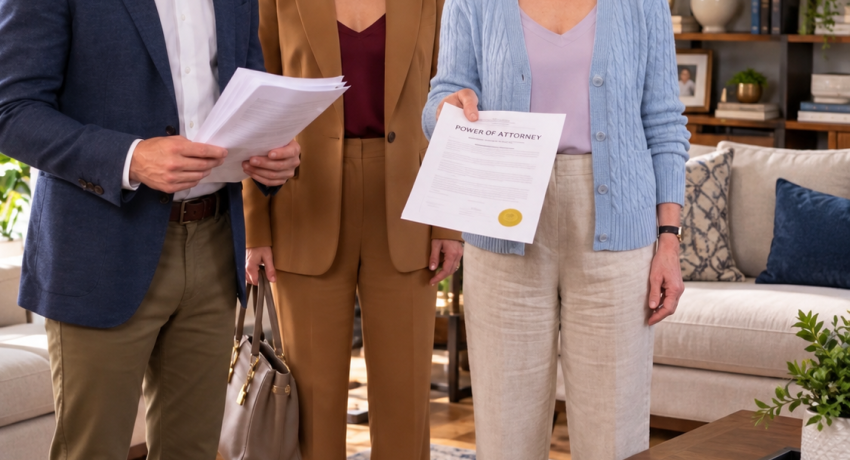
“Remember the power of attorney you signed when Dad was sick?”
My stomach clenched.
Of course I remembered.
I had signed papers in a hospital waiting room while Harold was fighting for his life.
Dominic had told me they were simply meant to help with medical matters and insurance if everything became too overwhelming for me.
“That document was for medical decisions.”
Dominic paused.
“It was broader than you remember.”
“No.”
“It gave me authority over financial matters too.”
Behind him, Amber’s expression brightened.
“We’re leaving for Europe today,” she announced.
I slowly turned to face her.
“What?”
“Three months,” she said. “France, Italy, Spain, maybe Monaco. Dominic works so hard. We both deserve the opportunity to enjoy life.”
And suddenly, everything became painfully obvious.
They were heading to Europe.
Using the money from my house.
“It’s not just about the vacation,” Dominic said quickly.
He must have noticed the realization spreading across my face.
“We’re investing in our future too. Amber wants to launch a business. I’ve been considering going back to school. This money gives us choices.”
I stared at him.
This was the child I had carried inside me for nine months.
The little boy whose fevers I had stayed awake beside all night.
The teenager whose baseball games I had never missed.
The young man whose graduation had brought tears to my eyes.
The son I had proudly watched marry the woman now standing in my living room, talking about my home as if it were an investment account.
“And where am I supposed to live?”
Amber reached into her handbag and took out a glossy brochure.
“We’ve already arranged everything.”
She handed it to me.
Sunset Manor.
A senior residential facility.
I knew the place.
I had visited people I knew there.
Its brochures displayed gardens, smiling residents, cheerful employees, and elegant dining rooms.
The reality had looked completely different.
“You’ll love it,” Amber said cheerfully. “Meals are included. There are activities every day. Medical staff are available around the clock. You’ll be surrounded by people your own age.”
“I don’t need medical staff around the clock.”
“You might someday.”
“I’m not going.”
Dominic sighed.
“Mom, the arrangements have already been made.”
I looked directly at him.
“What does that mean?”
“We paid six months in advance. The house closes next Friday.”
“You had no right.”
Amber’s smile vanished.
“You’re living in the past, Vera. Someone had to make the difficult choices. You’ve been forgetful lately, and this house requires more maintenance than you realize.”
Forgetful.
Yes, I had misplaced my glasses a few times.
I had once forgotten groceries in the trunk for an hour.
Grief had left me scattered since Harold died.
But I was not incapable.
I was not confused.
And I certainly was not prepared to give up control of my own life.
Dominic glanced at his watch.
“The taxi will be here in ten minutes.”
For a moment, I thought I had heard him wrong.
“Ten minutes?”
“To take you to Sunset Manor.”
“And your flight?”
“Two ten.”
They had arranged everything.
They were giving me ten minutes to say goodbye to thirty-five years of my life.
“What about my belongings?”
Amber casually waved one hand.
“The buyers are taking most of the furniture. We packed the important personal things and put everything else in storage.”
“You packed my belongings?”
“You can visit the storage unit whenever you want.”
Visit my own possessions.
I slowly turned my eyes around the room.
Harold’s chair beside the fireplace.
The corner where our Christmas tree had stood every December.
The doorway where we had marked Dominic and his sister Sarah’s heights as they grew.
Then a thought suddenly occurred to me.
“Does Sarah know?”
Dominic and Amber exchanged a glance.
That pause told me everything.
“Sarah lives in California,” Dominic said. “She has her own responsibilities. We didn’t want to involve her.”
My daughter called twice every week.
She never would have approved of this.
They hadn’t spared her the burden.
They had intentionally kept her out of it so she couldn’t stop them.
A horn sounded from outside.
Dominic reached for a small suitcase resting near the door.
Apparently, they had packed one for me as well.
Three months’ worth of European luggage for themselves.
One tiny suitcase for the woman whose entire life they had torn apart.
As Dominic opened the door, I saw my reflection in the hallway mirror.
For one awful moment, I looked exactly like the person they wanted me to be.
Small.
Confused.
Old.
Defeated.
Then I met my own gaze.
The fire was still there.
“Dominic.”
He paused.
“What?”
“Your father would be ashamed of you.”
For a brief second, his expression shifted.
I saw the little boy who used to climb into our bed whenever thunderstorms rolled through.
Then Amber placed a hand on his arm.
The moment disappeared.
“Enjoy Europe,” I said softly.
And I walked toward the taxi.
I never turned around.
But as the car carried me away from the house I had called home for thirty-five years, I wasn’t thinking only about everything I had lost.
I was thinking about something Dominic and Amber had forgotten.
They thought they knew everything about me.
They didn’t.
And by the time they realized just how badly they had underestimated me, it would be much too late.
The game was only beginning.
—
The smell of Sunset Manor reached me before anything else.
Disinfectant.
Overcooked cafeteria food.
Industrial carpet cleaner.
And underneath it all, something much harder to put into words.
Resignation.
From the outside, the building looked exactly like the brochure.
Trimmed lawns.
Yellow siding.
Flower boxes beneath the windows.
Inside, the atmosphere was completely different.
Fake leather chairs surrounded a television playing a game show nobody appeared to be watching.
Three residents sat near the window in wheelchairs.
One woman continuously whispered to herself.
Another tried to get up before a young aide gently guided her back into her chair.
“You must be Vera.”
A woman wearing blue scrubs approached with a clipboard.
“I’m Nancy, the intake coordinator. Your son took care of all the paperwork. Wasn’t that thoughtful?”
Thoughtful.
I nearly laughed.
Instead, I followed her.
My room was 207.
The number had already been printed beside my name.
VERA MITCHELL.
As though they had been expecting me.
The room was barely bigger than my old walk-in closet.
One bed.
One dresser.
One chair.
One window facing the parking lot.
“You’ll have breakfast at seven, lunch at noon, and dinner at five,” Nancy explained. “Bingo is on Tuesday. Crafts are Wednesday. We have a small library down the hall.”
She gave me a packet packed with schedules and rules.
“The bathroom is shared with Mrs. Henderson next door. Visiting hours are two to six on weekdays and ten to six on weekends.”
Visiting hours.
I felt less like a resident and more like a prisoner.
After Nancy left, I sat on the narrow bed and looked at the suitcase Dominic had packed.
Three dresses.
Undergarments.
Toiletries.
A few personal belongings.
And one framed photograph of Harold and me from our wedding day.
That was everything.
Sixty-two years of life reduced to a single suitcase.
Dinner consisted of meatloaf, mashed potatoes, and vegetables cooked until they barely had any shape left.
I sat with three strangers.
Margaret talked endlessly about a grandson who never came to see her.
Rose repeatedly rearranged her pills.
Edward slept through most of the meal.
I ate every bite.
Not because I enjoyed it.
Because I needed to keep my strength.
That Night, Lying Awake Beneath Unfamiliar Sheets, I Listened to the Building Around Me.
Someone crying in the hallway.
The elevator groaning.
A cart rolling across the linoleum.
Footsteps moving past my door.
Only then did I let myself fully understand what Dominic had really taken.
Not simply my house.
My independence.
My choices.
My dignity.
My right to determine what happened during the years I had left.
And he had done it while pretending he was acting for my benefit.
But sometime after midnight, anger began to replace my grief.
Dominic had made one major mistake.
He thought I was helpless.
I wasn’t.
He didn’t know about the safe-deposit box Harold and I had kept.
He didn’t know about the separate savings I had accumulated through life-insurance money, part-time work at the library, and years of careful saving.
And he certainly didn’t know how closely I had watched our finances while Harold was sick.
Dominic also failed to understand something else.
I remembered the power of attorney.
Very clearly.
It had been restricted.
I had made absolutely sure of that.
The document Dominic showed me that morning looked wrong.
The formatting.
Where the signature had been placed.
Even the paper itself.
Could my son have changed the document?
Could he have forged my authorization to sell the house?
Lying there in the darkness, I felt the faintest smile appear.
If he had, then Dominic was facing much bigger problems than he understood.
—
I met Dorothy the next morning.
She sat by herself at breakfast, reading a romance novel while eating oatmeal.
“Any good?” I asked.
She peered over the top of her glasses.
“Terrible.”
Then she smiled.
“I love it.”
I took the seat across from her.
“I’m Vera.”
“Dorothy.”
She examined me for a few moments.
“You’re new.”
“Is it that obvious?”
“You still look angry.”
“That gives it away?”
“Most people arrive here looking defeated.”
She shut her book.
“You look like you’re plotting something.”
“I might be.”
Dorothy’s smile grew.
“Good. Angry women are interesting.”
During the next several days, she became my guide.
She knew which staff members would bring extra dessert.
Which ones genuinely treated the residents with kindness.
Which telephone in the lobby provided the most privacy.
She also knew a thing or two about the law.
“I worked as a paralegal for thirty years,” she told me one afternoon as we sat in the garden.
When I finally shared the entire story with her, she listened without interrupting.
Then she said exactly what I had already been thinking.
“If the authority you signed was strictly medical, he couldn’t simply turn it into broad financial authority.”
“So what should I do?”
“You get the original document.”
“And then?”
“You find a very good lawyer.”
The next morning, I used the telephone in the lobby.
My first call went to the bank.
My private accounts were untouched.
Dominic had no access to them.
My second call was to an attorney Dorothy trusted.
“Peterson and Associates,” a receptionist answered.
“I need to speak with someone about possible financial exploitation,” I said. “My son may have used altered legal documents to sell my house without my permission.”
—
Margaret Peterson was precisely the kind of attorney I needed.
Direct.
Experienced.
Completely unimpressed by intimidation.
And clearly angry when she heard what had happened.
After examining the documents I obtained, she leaned back in her chair.
“Mrs. Mitchell, there are serious irregularities here.”
Dorothy was seated beside me.
Margaret set the original authorization beside the version Dominic had used.
“The document you signed was limited. The version used for the property transaction contains substantial changes. We’ll need a forensic examination, but there is enough here to challenge what happened.”
“Can I get my house back?”
“We have strong grounds to challenge the transaction and seek damages. However, because third parties are involved, it may take time to properly unwind everything.”
“How long?”
“Potentially months.”
Months.
I thought about room 207.
The cafeteria.
The shared bathroom.
The smell of disinfectant.
Then Margaret showed me something else.
“The sale price also concerns me.”
“Why?”
“Comparable homes nearby are worth considerably more than two hundred fifty thousand dollars.”
My anger became sharper.
Dominic hadn’t merely taken my house.
He may have rushed the sale for far less than what it was actually worth.
“What happens next?”
“We preserve the evidence, notify the appropriate authorities if the document alteration is confirmed, pursue civil remedies, and make sure your remaining assets are protected.”
“He’s in Europe spending the money.”
Margaret’s lips tightened.
“Then his financial records could become very important.”
Dorothy squeezed my hand.
“This is going to work.”
But I was starting to think beyond simply getting back what had been taken.
Dominic had dismissed me.
He had humiliated me.
He had put me in Sunset Manor and flown overseas before I had even unpacked.
He believed I would quietly accept whatever happened.
I wanted more than a legal victory.
I wanted my life back.
And I wanted him to understand the consequences of underestimating me.
“When does he need to know about the case?” I asked.
Margaret studied me carefully.
“Eventually, he’ll be formally notified.”
“He’ll be gone for almost three months.”
An idea was beginning to form.
“Then let him enjoy Europe for a little while longer.”
Dorothy looked at me.
Margaret raised an eyebrow.
“What are you thinking?”
I smiled.
“I’m thinking I have a few arrangements to make.”
—
The next morning, I went to the bank.
Mr. Curtis had known Harold and me for more than twenty years.
By the time I finished telling him what Dominic had done, his face had turned red.
“Mrs. Mitchell, that’s outrageous.”
He brought up my records.
“Your individual savings and certificates are untouched. Altogether, you have roughly eighty-five thousand dollars that Dominic cannot access.”
More than enough to start rebuilding my independence.
“I want everything secured,” I said.
“We can do that.”
“And I want to discuss estate planning and a trust.”
He nodded.
“That’s probably wise under the circumstances.”
By the time I left, my finances were separated from anything Dominic might be able to reach.
I opened a new checking account.
Changed my mailing arrangements.
Updated my beneficiaries.
And started discussing long-term protections for my property.
My next stop was Linda Hayes, a real estate professional Harold and I had worked with years before.
When she saw me, she immediately got to her feet.
“Mrs. Mitchell, I heard what happened. I’m so sorry.”
“I need your help.”
“With the house?”
“With more than the house.”
Over the next several weeks, Linda helped me explore legitimate real estate opportunities in my old neighborhood.
A property next door had recently been listed.
Then a small apartment building nearby became available.
For years, Harold and I had lived carefully.
We had saved.
Invested.
And planned.
Dominic had believed the house everyone could see was everything I owned.
He was mistaken.
Very mistaken.
I started putting some of those resources to use.
Not carelessly.
Not because I wanted to hurt him.
But to create something that was entirely mine.
Something nobody could ever take from me again.
Dorothy enjoyed every second of it.
Each evening, we sat together and discussed my plans.
“You know what?” she said one night.
“What?”
“Watching you do all this has made me realize something.”
“What?”
“I’m not dead either.”
I laughed.
“My daughter moved me here because caring for an aging mother became inconvenient. But I have savings. I have choices. The only thing holding me here is fear.”
She looked around at the building.
“Maybe once you get out, I will too.”
That was when I realized this story had become about something larger than revenge.
It was about refusing to vanish.
Growing older did not mean becoming powerless.
Needing help someday did not mean giving up every decision today.
And family did not have the right to erase someone’s independence simply because doing so was convenient.
—
Two weeks later, Dominic mailed me a postcard from Paris.
The Eiffel Tower covered the front.
On the back, he had written:
Having an amazing time. Hope you’re settling into Sunset Manor. The staff says you’re adjusting well. Love, D & A.
Adjusting well.
I showed it to Dorothy.
She immediately burst out laughing.
“If he only knew.”
Exactly.
If he only knew.
While Dominic and Amber traveled across Europe, Margaret continued developing the legal case.
My finances were protected.
My living situation was changing.
My property investments were progressing.
And most importantly, arrangements were being made for me to leave Sunset Manor.
Several weeks later, Dominic mailed another postcard.
Venice this time.
Living like royalty. Five-star hotels, incredible restaurants. So glad we finally made this dream happen. Missing you.
Missing me.
Margaret had started receiving financial records through the case.
The spending was staggering.
Luxury hotels.
First-class flights.
Designer stores.
Expensive restaurants.
An expensive watch for Amber.
Thousands spent in a single afternoon.
Money from my house was vanishing throughout Europe one receipt at a time.
“They’ve spent most of it,” Margaret told me during one meeting.
I stared at the report.
“While I’ve been living here.”
“Yes.”
“When are they coming home?”
“Tuesday.”
I nodded.
“Good.”
Because by Tuesday, I would no longer be in room 207.
Discover more
Online story platform
Financial security resources
Social media marketing
—
The morning I left Sunset Manor, Dorothy came downstairs with me.
I carried the same suitcase Dominic had packed.
But I was no longer the same woman who had arrived with it.
Linda was waiting outside.
When we reached my neighborhood, my throat tightened.
My roses.
My driveway.
My front porch.
Home.
Through the legal proceedings and a negotiated resolution involving the parties connected to the disputed sale, possession of the property had been returned to me while the remaining financial claims continued separately.
I stepped onto the porch.
Dorothy stood at my side.
“So this is it.”
“This is it.”
“I understand why you fought for it.”
The front door opened.
Inside, the house felt familiar, yet somehow different.
My belongings were being brought back from storage.
Harold’s chair.
My grandmother’s lamp.
Family photographs.
Books.
Dishes.
Boxes I had believed I might never see again.
But I didn’t put everything back exactly as it had been.
That surprised me.
I selected new paint.
Bought a different couch.
Rearranged the furniture.
Added brighter curtains.
I installed a modern security system.
The house would always carry my history with Harold.
But it would no longer be a museum devoted to the past.
It was going to become my home once again.
My present.
My future.
That evening, I prepared dinner in my own kitchen.
The scent of jasmine floated in through the window.
For the first time in weeks, I ate exactly what I wanted, whenever I wanted it.
My phone rang.
Margaret.
“They landed.”
I placed my fork down.
“And?”
“They’ve received formal notice of the proceedings.”
I leaned back.
“What happened?”
“Dominic contacted an attorney immediately.”
I almost smiled.
Of course he did.
“Don’t discuss the legal case directly if he calls,” Margaret reminded me.
“I understand.”
But Dominic never called.
Two hours later, a car door slammed in my driveway.
Then another.
The doorbell rang.
Once.
Twice.
Then someone began pounding on the door.
“Mom!”
I stayed in my chair for several seconds.
“Mom, open the door!”
I got up.
Walked to the entrance.
And opened it.
Dominic and Amber were standing on my porch.
The glamorous travelers who had left for Europe looked completely different now.
Wrinkled clothes.
Exhausted faces.
Panic.
Dominic was holding a stack of legal documents.
“What is this?”
I looked at the papers.
“Welcome home.”
“How are you here?” Amber demanded.
Her eyes immediately moved past me and into the house.
“You’re supposed to be at Sunset Manor.”
“No.”
I looked straight at her.
“That was your plan for me.”
Dominic stepped closer.
“Mom, we can fix this.”
“How?”
“The trip was expensive, but we still have some money left.”
“How much?”
Silence.
“Dominic?”
Amber answered.
“About seventy thousand.”
I allowed the figure to sit between us.
Two hundred fifty thousand dollars.
Almost all of it gone within weeks.
“You spent around one hundred eighty thousand dollars?”
Dominic looked away.
“We got carried away.”
“Obviously.”
“But we can pay it back.”
“With what?”
He opened his mouth, then shut it again.
They had assumed the money would keep coming.
They had made no real plan beyond the vacation.
Dominic pointed toward the legal papers.
“I had power of attorney. I thought what I did was legal.”
I walked over to my desk and took out a copy of the original document.
Then I placed it in his hands.
“This is what I signed.”
He read it.
Slowly, the color drained from his face.
“This doesn’t—”
“No. It doesn’t give you the authority you claimed.”
Amber stared at him.
“Dominic?”
He said nothing.
I looked at my son.
“But we’re family,” he finally said.
The words were almost impossible to believe.
“Family?”
“Yes. Families work things out.”
I slowly nodded.
“You’re right.”
Hope appeared briefly in his eyes.
“Families also don’t secretly sell each other’s homes.”
His expression collapsed.
“They don’t pack their mothers into a single suitcase and send them to a facility while boarding a flight to Europe.”
“Mom—”
“They don’t spend thousands on luxury hotels while the person whose money paid for the trip sits alone eating cafeteria meatloaf.”
Amber sank onto the couch.
I remained standing.
“You wanted me out of the way. You convinced yourself that because I was older and grieving, I no longer deserved control over my own life.”
“That’s not what I meant.”
“It doesn’t matter what you meant.”
I pointed toward the documents.
“What matters is what you did.”
Dominic lowered himself into a chair.
“What happens now?”
“You face the consequences.”
“You’re really going through with this?”
“Yes.”
His voice cracked.
“I’m your son.”
“And I was your mother when you sold my house.”
Silence.
For the first time, Dominic appeared to have no argument left.
I continued.
“You believed the house was all I had.”
He slowly raised his eyes toward me.
“It wasn’t.”
While he had been away, I had reorganized my finances, protected my estate, and invested in nearby property.
Not because I wanted to show off money.
Because I never wanted my security to depend on someone else’s judgment of whether I was useful.
“I own the house next door now,” I told him. “And I have an interest in the apartment building near the corner.”
Amber stared at me.
“How?”
“By saving for decades instead of assuming money exists only to be spent.”
Dominic looked stunned.
“You planned all this while we were gone.”
“I rebuilt my life while you were gone.”
There was a difference.
I walked toward the window.
“Your father taught me a lot about investing. We made financial decisions together for almost forty years. You simply never took the time to notice.”
Dominic remained quiet.
“You saw what you wanted to see,” I continued. “A grieving widow. An aging mother. Someone easier to control than respect.”
“I’m sorry.”
I turned toward him.
“Are you?”
“Yes.”
“You sold the home where your father and I built our life. You turned thirty-five years of memories into money for a vacation.”
His shoulders dropped.
“I know.”
“No. I don’t think you understand yet.”
I walked over to the door and opened it.
“For now, you need to leave.”
“Mom, please.”
“Any further conversation about the financial dispute goes through my attorney.”
Amber stood up.
Dominic stayed still for another moment.
Then he slowly got to his feet.
At the doorway, he turned around.
“Is there really nothing I can say?”
I looked at him.
“You can begin by understanding that being your mother never made me your property.”
Then I shut the door.
—
After they were gone, I sat quietly for a long time.
Strangely, I didn’t feel victorious.
I didn’t feel excited.
I felt peaceful.
My phone rang shortly before midnight.
Dorothy.
“Well?” she asked.
“It’s done.”
“How do you feel?”
I thought about the question.
“Free.”
She laughed softly.
“That sounds better than revenge.”
“It is.”
“Good. Because tomorrow I’m leaving Sunset Manor.”
I sat upright.
“You are?”
“I found an independent senior community near my niece. A private apartment. My own kitchen. My own schedule.”
I smiled.
“I’m proud of you.”
“You started it.”
“No.”
I looked around my house.
“You simply remembered that you still had choices.”
After we ended the call, I walked from room to room, switching on the lights.
My kitchen.
My books.
My chair.
My schedule.
My choices.
For the first time since Harold died, the future no longer felt like a hallway slowly closing in around me.
It felt wide open.
I was sixty-two years old.
I had my health.
My independence.
Financial security.
Friends.
And a new understanding of my own strength.
For years, I had allowed people to see me mainly as Harold’s wife or as Dominic and Sarah’s mother.
But I was still Vera.
And Vera still had a life to live.
—
Six months later, I was sitting beside the window reading the newspaper when a car door slammed outside.
Then the doorbell rang.
“Mom?”
Dominic.
“Please. I know you’re home.”
I finished reading the paragraph before going to the door.
When I opened it, I could barely recognize him.
He looked older.
His clothes were rumpled.
His hair needed a trim.
Dark circles had formed beneath his eyes.
Amber was nowhere to be seen.
“Hello, Dominic.”
“Can I come in? Five minutes.”
I hesitated.
Then moved aside.
“Five minutes.”
He entered slowly.
Not like the confident son who had stepped into my house months earlier with documents in hand and decisions already made on my behalf.
This Dominic seemed unsure of where he was even supposed to stand.
“You changed the house,” he said.
“Yes.”
“It looks nice.”
“Thank you.”
I sat down.
He stayed standing.
“Where’s Amber?”
His jaw tightened.
“She left.”
“When?”
“Three weeks ago. She moved back to Phoenix.”
I noticed his wedding ring was missing.
“I’m sorry.”
He gave me a weary look.
“You don’t have to pretend.”
“I’m not pretending. The end of a marriage is painful, no matter the circumstances.”
He nodded.
Then he raised a manila envelope.
“What’s that?”
“Money.”
I waited.
“Seventeen thousand four hundred thirty-two dollars.”
I looked at him.
“Why?”
“It’s everything I have.”
He placed the envelope on the table.
“I sold my golf clubs, my watch, my electronics, whatever I could. I’ve been doing construction work and day labor.”
“What happened to your job?”
“I lost it after the case became public.”
“And your apartment?”
“Gone.”
“Where are you living?”
He looked down at the floor.
“My car.”
For one brief moment, I felt the instinct every mother understands.
The urge to rescue your child.
To offer him the spare bedroom.
To cook him a meal.
To tell him everything would be all right.
Then I remembered room 207.
The suitcase.
The SOLD sign.
I kept my voice steady.
“Why are you here, Dominic?”
“To give you that.”
“That isn’t what I asked.”
He shut his eyes.
Then lowered himself onto the edge of the couch.
“I understand now.”
“Understand what?”
“What I did to you.”
I said nothing.
He continued.
“I know what it feels like to lose control over your own life. To wake up somewhere you never intended to be. To have people you trusted decide that you’re not worth standing beside.”
His voice grew softer.
“I understand what I did.”
“Do you?”
“Yes.”
He looked around the room.
“I keep thinking about you at Sunset Manor while Amber and I were sharing pictures from five-star hotels.”
He swallowed.
“And it makes me sick.”
“It should.”
“I know.”
There was no argument in his voice.
No defensiveness.
No excuse.
“I treated you like you were something in my way,” he said. “I told myself I was helping you because it made what I was doing easier to justify.”
He looked straight at me.
“But I wasn’t helping you. I was using you.”
For six months, I had wondered whether Dominic would ever understand that difference.
Now, at last, he did.
“What’s the money for?”
“I stole from you.”
He nodded toward the envelope.
“So I’ll repay you. Every month. However long it takes.”
“At that rate, it could take many years.”
“I know.”
I picked up the envelope.
Then placed it back down.
“The money was never the most important part.”
He frowned.
“Then what was?”
“Respect.”
I leaned closer.
“You forgot that I was a person.”
He stared at me.
“You only thought of me as your mother. Someone who was supposed to support you, forgive you, help you, and stay out of your way.”
His eyes dropped.
“You never stopped to remember that I am Vera too.”
“I know.”
“I had a marriage. A career. Friends. Plans. Opinions. Fears. Grief. Dreams. You reduced all of that to one word.”
“Mom.”
“Yes.”
I got up and walked over to the window.
“While I was at Sunset Manor, I met people whose families had done similar things. Maybe it wasn’t fraud. Maybe they hadn’t sold their homes. But the basic thing was the same.”
“What?”
“They decided that convenience mattered more than dignity.”
Dominic stayed quiet.
“I realized I wasn’t ready to disappear.”
I turned back toward him.
“I wasn’t prepared to become invisible simply because someone else decided that sixty-two was old enough for me to stop making my own choices.”
He nodded.
“You completely outsmarted us.”
“This was never about outsmarting you.”
“But you did.”
“Because you underestimated me.”
He gave me a small, embarrassed smile.
“That too.”
I went back to my chair.
“What happened between you and Amber?”
“She blamed me for everything.”
“Did you blame her?”
“For a while.”
“And now?”
He breathed out slowly.
“I made my own decisions.”
That answer meant more than he probably understood.
“I’m going to keep the money,” I said.
He looked relieved.
“Not because seventeen thousand dollars can undo what happened.”
“I know.”
“I’m keeping it because you worked to earn that money and brought it here. That tells me you’re finally accepting responsibility.”
His eyes filled with tears.
“I’m trying.”
“That’s different from changing.”
“I know.”
“Real change takes time.”
“I know that too.”
He hesitated.
“Do you think there’s any possibility that we could have a relationship again someday?”
I thought carefully about his question.
“Maybe.”
His expression shifted.
Not exactly happiness.
Hope.
“But it won’t be the relationship we had before.”
“I understand.”
“If you want me in your life, you need to know me as a person, not simply as Mom.”
“I’d like to try.”
“That’s a beginning.”
He stood.
Then stopped.
“Can I ask you something?”
“Yes.”
“Are you happy?”
The question caught me by surprise.
“What do you mean?”
“I mean truly happy. Not because you won. Not because you proved me wrong. Are you genuinely happy?”
I thought about Dorothy living independently.
The weekly lunches I had with old friends.
The nonprofit legal clinic where I had begun volunteering with seniors facing financial exploitation.
My properties.
My garden.
The painting class I had joined.
The evenings when I still missed Harold terribly.
And the mornings when I woke up curious about what the new day might bring.
“Yes.”
I smiled.
“I am.”
Dominic nodded.
“Good.”
He reached the doorway.
“You deserve that.”
After he left, I stayed in my chair, thinking about forgiveness.
People often speak about forgiveness as if it means acting as though nothing ever happened.
I had learned that it meant something else.
Forgiveness did not remove consequences.
It did not restore trust overnight.
It did not require me to become the same woman I had been before.
Maybe Reconciliation Would Happen Someday.
Maybe it wouldn’t.
Dominic would have to demonstrate through his actions that the man sitting in my living room that afternoon was truly different from the man who had sold my house.
But for the first time, I believed that change might actually be possible.
The doorbell rang again.
A delivery truck from the garden center had arrived.
The workers were carrying rose bushes.
I led them to the area beside the porch where Harold’s original roses had once grown.
“Right here,” I said.
One of the workers began digging.
Fresh soil turned beneath his shovel.
As I watched, I remembered something Harold used to say.
Roses require patience.
Strong roots need time.
And the most beautiful blooms often appear after difficult seasons.
Maybe life worked the same way.
I wasn’t trying to replace what I had lost.
Nothing could replace Harold.
Nothing could erase what Dominic had done.
But there was nothing wrong with planting something new alongside the memories of what had once grown there.
At sixty-two, I had discovered something I wished I had understood much earlier.
Your life does not end simply because someone else decides you are no longer useful.
Your voice does not vanish just because your children become adults.
Getting older does not erase intelligence.
Love does not mean surrendering your dignity.
And sometimes, the moment people believe you are finished is exactly when you discover how much strength you still have.
The roses would need time.
So would Dominic.
So would I.
But I had time.
I had choices.
I had independence.
And most importantly, I had found myself again.
That was worth more than any house.
More than any victory in court.
More than winning any game.
Because in the end, this had never truly been about defeating my son.
It had been about refusing to lose myself.
Now I’m curious about you.
What would you have done if you were in my position?
Have you ever experienced someone underestimating you simply because of your age, your circumstances, or because they assumed you would never fight back?
Share your thoughts in the comments.
And before you leave, there are two more stories waiting on the final screen. They’re audience favorites—and both have endings you probably won’t see coming.









