 34 views
 I thought I understood why Mom had made me promise to wait until life became truly difficult. But when I finally opened what she had left behind, I realized her promise had a much deeper meaning.
The foreclosure notice sat beneath the living room light like an accusation. Mr. Benson’s name appeared across the top in the bank’s stiff lettering, with “FINAL” stamped underneath as though the notice itself wasn’t already painful enough.
I read it twice before letting out a breath.
Three payments overdue. Fourteen days to respond.
In my bedroom, I climbed onto the closet stool and reached for the shoebox resting on the highest shelf. Beneath an old birthday card was the envelope Mom had given me three years before.
Years of taking it down and putting it back had left the paper soft.
I carried it to the bedroom table as carefully as though it were something priceless.
Before I opened it, my mind drifted somewhere kinder.
I pictured our old duplex, Mom—Georgia—standing at the kitchen counter with her coupon binder spread out, her tongue tucked between her teeth as she clipped coupons with almost surgical concentration.
“Sienna, come here,” she would call. “Two-for-one on the good spaghetti. Now that’s something worth celebrating!”
The memory made me smile.
Mom raised me by herself and never complained about it. Our birthday cakes were made from whatever ingredients we happened to have in the pantry. If pancakes were all we could afford, she stacked them up, placed a candle on top, and sang until I somehow felt like the richest child in the world.
We didn’t have much, but I never felt like I was missing anything.
Mom knew how to stretch every dollar, so unnecessary purchases were uncommon. We were extremely close, and she had a gift for making our simple life feel abundant.
That made her illness years later even harder to endure.
The next six months were devastating. I practically moved into her living room. I slept in the recliner beside her bed, drove her to appointments before sunrise, kept the household going, and memorized medication names I hoped I would someday forget.
As her condition worsened, I stayed close whenever I could.
By the end, she seemed impossibly small. The hands that had always been busy were now lying still on the blanket.
Three days before she died, Mom asked me to sit beside her. She opened her nightstand and pulled out the sealed envelope that was now resting in my hands.
“There’s $1,500 inside,” she whispered. “Promise me you won’t open it until you’re truly struggling.”
I stared at her in disbelief. Mom had spent her whole life keeping track of every dollar, so I couldn’t understand how she had managed to save $1,500.
“Mom, $1,500? Where did you…?” My voice failed me. “Where would you even get that?”
She gave me the familiar smile that told me no explanation was coming.
“Promise me, baby.”
It was one of the final things she asked of me, so I agreed.
“Not for a rough month. Not for a bill. When you’re truly struggling, you’ll know.”
Mom squeezed my hand with the little strength she still had, and that was where the conversation ended.
After she died, I put the envelope away and treated it like something I hadn’t yet earned the right to open.
To understand why that night mattered, you have to go back three years.
—
After Mom’s funeral, I followed the lesson she had drilled into me: keep moving forward.
My call center paycheck covered the mortgage on the small starter home she had helped me buy with a down payment.
The envelope remained unopened when the water heater exploded that first winter. It stayed untouched when a transmission repair swallowed two of my paychecks. It remained sealed after I slipped in a parking lot, broke my wrist, and ended up with an emergency room (ER) bill.
Every time, I found another way through.
When the water heater broke, I picked up weekend shifts and endured cold showers. When the transmission failed, I survived on rice for an entire month. I slowly paid down the ER bill with payments so small they almost felt pointless.
I kept imagining Mom would be proud of me.
All the while, I knew the envelope was sitting on the highest shelf, waiting like emergency power I wasn’t supposed to use yet.
Then, in June, my company downsized.
I left with two weeks of severance and a handshake.
After four months of unsuccessful job applications, I was three mortgage payments behind, and Mr. Benson, the lender, sent a certified letter that landed on my kitchen counter like a small white bomb.
—
That evening, my best friend Amara showed up carrying Thai food and wearing an expression that told me she already knew what was happening.
“Sienna. Is that what I think it is?”
“It’s fine. I’m handling it.”
She set down the food, picked up the notice, read it silently, and then folded it back into thirds.
“Okay. The spare room is yours, friend, rent-free, starting whenever you need it. I’ve got two grand sitting in savings, no interest and no deadline. And my cousin handles loan modifications at a credit union; I’ll text her tonight.”
“Amara…”
“Also, did you ever follow up with Juniper about that scheduling position? I sent it to you weeks ago.”
Juniper was another friend who owned a logistics company.
I stared at the takeout container. “I sent something in. I haven’t heard anything yet.”
I had interviewed a month earlier and had spent every morning expecting the polite rejection that never came.
“Sienna, please. Just take the room.”
“I appreciate it. I really do. But I take care of my own. That’s how Mom raised me.”
Amara went still, then slowly lowered her chopsticks.
“Georgia is exactly where you learned that. And I’m not saying that as a compliment.”
My throat tightened. I stared down at the pad Thai as though it were somehow to blame.
“Your cousin is probably a dead end anyway. Credit unions aren’t going to work with someone who’s been without income for four months.”
“You don’t know that.”
“Can we just let it go? I’m going to open the envelope. Tonight. Let me do that first.”
Amara watched me in silence, obviously considering whether she should argue.
She decided not to.
Somehow, that hurt even more.
After she left, I sat alone with the foreclosure notice, the leftover noodles, and enough quiet that I could hear the refrigerator humming.
Then my phone rang.
Aunt Delia.
For the past few years, beginning before Mom got sick, she had called me during this same week. I never questioned why. I assumed she was simply trying to ease the emptiness Mom had left behind.
“Hi, honey. I just wanted to check on you this week.”
“Hi, Aunt Delia.”
“How are you doing, sweetheart?”
The word “mortgage” almost came out of my mouth. It sat there, heavy and ready. My aunt would have understood. She would have known exactly what to say.
“I’m fine. Thanks for calling.”
“Are you sure?”
“Yeah. Just tired.”
“Well. You know I’m here for you, right?”
“I know. Thanks.”
After we ended the call, I lowered my phone and confronted what I had just done.
Aunt Delia was probably the easiest person I could have told.
Still, I couldn’t bring myself to say it.
The envelope lay across my lap. Three years of telling myself “not yet” had finally come to an end.
I ran my thumbs over the sealed edge. My eyes stung.
“Mom,” I whispered. “I think this is what you meant.”
There was no reason to wait another night.
I went to the kitchen drawer and took out a butter knife.
Then I returned to the room and sat down again.
I turned the envelope over and carefully slipped the blade beneath the flap.
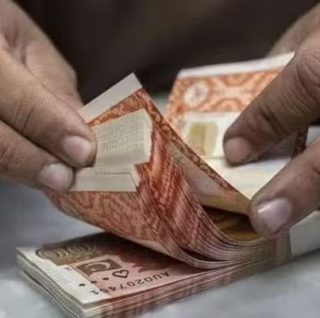
Inside was the money, exactly as Mom had promised, neatly arranged in bundles of fives, 10s, and 20s.
Behind the money was a folded letter written in Mom’s familiar late handwriting, with the uneven loops I remembered from her final Christmas cards. A photograph slipped out beside it.
I picked up the photograph first.
Mom was sitting at a folding table, looking thin but smiling, with a pile of quilts stacked beside her.
A smaller note had been attached to the letter.
“Read the pages in your hand first. The final page is inside its own envelope, tucked beside the photo. Promise me you’ll sleep on the first part before opening that seal. Trust me, baby.”
I turned everything over.
Tucked behind the photograph was a second envelope, flattened and held shut with masking tape. Mom had written a single word across it:
“Morning.”
“Mom,” I whispered, “what is this?”
I opened the first letter.
“Sienna, sweetheart. The money inside this envelope didn’t come from any account. There wasn’t an account to take it from. I sewed it, honey. Every single dollar.”
I paused before continuing.
“The quilts were a wedding ring, a double star, and one that I had to take apart three times because my fingers couldn’t keep the needle steady. Mrs. Everly from two doors down took them to the Saturday market for me. She refused to accept a penny for helping. She stayed with me on the difficult nights and threaded needles whenever my hands went numb.”
Slowly, I placed the letter down on the table.
“Mom,” I said aloud, “but you were sick. You were so sick.”
Then a memory came back to me: the light shining beneath her bedroom door late at night. I had always assumed she was reading and never asked because I didn’t want to bother her.
I looked at the photograph again.
The quilts were stacked almost as high as her shoulder. Mom wore the satisfied smile of someone protecting a secret.
“You never told me,” I said.
The small bills were spread across the table now, but they no longer looked like money.
They looked like hours.
They looked like Mom sitting beneath a yellow lamp after midnight, sewing between chemotherapy treatments because she wanted her daughter to have something waiting for her when life eventually became too difficult.
I cried with the delayed realization of a kindness someone had quietly given me years before.
Eventually, my attention returned to the sealed envelope labeled “Morning.”
Almost without thinking, my hand reached toward it.
Then Mom’s note stopped me:
“Sleep on the first part first.”
“Okay, Mom. One night.”
I left the cash where it was and carried the first letter, photograph, and sealed envelope over to the couch. I tucked my legs beneath me and sat there quietly.
I thought about Mrs. Everly and all the times I had walked past her porch during those three years without stopping.
I thought about Amara showing up with an offer of a spare room while I insisted I could handle everything myself.
Then I remembered Aunt Delia asking how I was doing and the automatic response I had given her:
“I’m fine.”
Darkness gradually settled over the room.
I fell asleep with Mom’s photograph lying against my chest.
—
The following morning, steam rose from my coffee as I slipped my thumb beneath the tape sealing the second envelope.
“Sienna. Whatever day this is, the $1,500 will not be enough by itself. I couldn’t possibly know when you would finally open the envelope. So I’m deliberately sending you somewhere else.”
My breath caught.
“During my final weeks, I made a small request of your Aunt Delia and asked her to keep it for you. Whether it took months or years, however long it took you to come to her door. The money was never the point, baby. If you had opened this because of a broken refrigerator in the first year, this letter would still send you to her. And she would still be waiting. Go there in person. Please don’t call first.”
I read the page twice, my throat tightening.
—
At first light, I drove to Aunt Delia’s house and pulled into her driveway. With the engine turned off, I watched the glow of her porch light against the pale morning sky.
It took several minutes before I finally made myself knock.
She opened the door wearing her robe and froze, one hand immediately rising to her collar.
“Sienna, you’re here! Honey, I know how this must look. I should have told you. I should have driven it over myself years ago; I just—”
“I didn’t come here to argue,” I said softly.
She stepped aside and let me in.
At the kitchen table, Aunt Delia slid a sealed envelope filled with small bills across to me.
She had held onto it for three years.
“Your mother asked me to keep this until you came to my door,” she said. “She knew you would never call or simply show up on your own. It was never really about the money.”
“Yes, I wouldn’t have,” I admitted.
I opened the envelope, froze for a moment, and then began to cry.
“She asked me to put that money aside for you. But more importantly, I wanted to remain part of your life,” my aunt said.
At that moment, the $1,500 no longer seemed important.
The money had never been the real gift.
Mom had been quietly guiding me back toward my family, making certain we would find our way back to each other even after she was no longer there to make it happen herself.
“I think I need to confront the things I’ve been avoiding.”
I reached for my phone.
First, I texted Amara and accepted her offer of a loan.
Then I called the loss mitigation department at Mr. Benson’s bank. When someone answered, I introduced myself and explained what was happening.
“I was laid off four months ago,” I said. “I’m three payments behind and currently looking for work.”
He checked my account and told me the reinstatement amount was approximately $6,800.
I calculated everything on a napkin.
Mom’s $1,500. Aunt Delia’s envelope held $1,000. Amara had offered $2,000.
“I have $4,500 in certified funds from a mother’s bequest, an aunt’s bequest, and a friend’s loan,” I said. “Would that be acceptable as a good-faith deposit, with the remaining balance placed under forbearance?”
“Bring it to the branch by Friday along with the documentation,” he said. “Loss mitigation will review it. Seven to 10 business days.”
When the call ended, I looked across the table at my aunt.
“Will you come with me to the bank, Auntie?”
She nodded, tears filling her eyes.
—
That Friday, Aunt Delia drove me to the bank and then to Mr. Benson’s branch. She remained beside me at the counter while I handed over the check.
—
That evening, I called her again.
This time, I told her everything out loud—the layoff I had kept secret and the quilts Mom had quietly sewn late at night.
She listened until I was finished, then said, “I’ve always been here for you, and I’ll help you in whatever way I can.”
Afterward, I unfolded Mom’s final page.
Georgia had written that the money was never the gift. Neither was what Delia had kept for me.
The real gift was the relationship we would create after she was gone.
—
A few days later, the job lead Amara had given me became a real offer!
I called my aunt to share the news, then called Amara, who came over after work.
She held my hand, and I laughed through my tears because I finally understood the lesson Mom had left behind for me.
I didn’t have to carry everything by myself.