
 56 views
 For Four Years, My Parents Told Everyone I “Disappeared” After I Stopped Sending Money Home. Then They Sent My Brother to Find Me
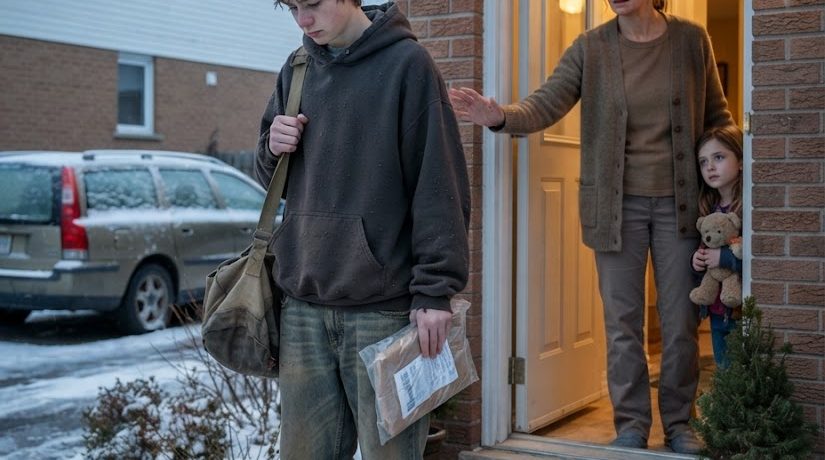
For four years, my parents told everyone I had “disappeared” after I stopped sending money home. Then they sent my brother to track me down. He knocked, looked past me, and suddenly went pale. He slowly backed down the steps with his phone pressed to his ear. “Mom, you need to see this. She never told us…”
There’s a house in Asheville, North Carolina, with a robin’s-egg blue front door. I painted it myself during the week we moved in—three coats using a cheap brush while the light was good. I put on the final coat the same day I stopped apologizing.
Inside lives my three-and-a-half-year-old daughter, Marin, who firmly believes pancakes belong to their own food group. I work twelve-hour shifts in the intensive care unit downtown, sometimes stretching to sixteen. I can remember the medication schedules of eight patients without checking a chart and still manage to forget lunch.
I’ve watched people slip away quietly.
My family taught me how.
That’s a joke I only make when I’m driving home alone, where no one has to figure out whether they’re supposed to laugh.
Our life is modest and deliberate.
Daycare. Work. Pancakes. Saturday trips to the library.
First came rent. Then, somehow, there was a mortgage.
I painted every room in the house myself, but the front door was the only thing I obsessed over. Blue like the sky at the end of a night shift, when everything is still and, for a brief moment, feels like it belongs to you.
For four years, no one from Dayton, Ohio, had stepped across that threshold.
That was intentional.
It also wasn’t the version of events my family shared with everyone else.
Here’s the trouble with that word.
Disappeared sounds passive.
Fog disappears.
Keys disappear.
The word conveniently removes the person responsible for making something disappear.
What really happened was much simpler.
I stopped sending money home.
The money is where this story starts.
It isn’t where the story finishes.
If I’m being precise—and nurses are trained to be precise—it actually began ten years earlier with an envelope handed to me at my nursing-school graduation dinner.
I was twenty-four, the first Ives to graduate from college. I had paid for my degree through student loans and countless double shifts at a diner.
My mother, Carol, hosted the dinner at our home in Dayton.
Pot roast. A folding table squeezed against the kitchen table. A sheet cake with my name spelled correctly. My diploma rested beside the gravy boat as though it were an honored guest.
My father, Ray, said grace.
Danny, who was nineteen then, ate most of the cake.
For roughly two hours, I was the pride of that kitchen.
I would have done nearly anything to keep feeling that way.
Remember that.
My mother did.
After dinner, she pushed a cream-colored envelope across the table toward me. My name was written across the front in the neat handwriting she used for church bulletins.
I assumed it was a card.
It was empty.
“For the house,” she said, gently patting my hand. “You’re the one who made it out.”
She said it with warmth, almost casually, as though she were handing down a family recipe.
Nobody at the table said anything.
Dad kept staring into his coffee.
Danny looked down at the cake.
I laughed because I thought I understood what she meant.
One envelope.
One favor.
The least I could do.
New nurses made decent money. Their furnace was old. I had made it out.
So I filled that envelope with money from my first paycheck and mailed it back.
The next month, another envelope arrived at the apartment I shared with two other nurses. Same handwriting.
Same expectation.
Then another followed.
Nobody needed to ask out loud again.
The request had already been made once, during a celebration, in front of witnesses and wrapped in pride.
That envelope had never been meant to be a one-time favor.
It was a subscription.
I just hadn’t bothered to read the terms because I’d been taught that those terms were another name for love.
By my second year, I switched to Zelle because mailing envelopes had become absurd.
On the first day of every month, money disappeared from my account before sunrise.
Usually $1,400.
Sometimes $2,000.
There was always another emergency.
A furnace.
Dad’s truck transmission.
A roof damaged by hail.
I paid for that roof and felt proud.
A daughter keeping the rain off her father’s head from three states away.
Then Danny needed a used Honda because his job required reliable transportation.
Christmas money came on top of that.
Birthdays and Easter did too.
On my side of the ledger, the money looked like night-shift differentials and holiday pay.
Six Christmases in a row spent working because Christmas paid double.
I became the nurse who never turned down overtime.
My coworkers assumed I was saving for something.
I was.
I just couldn’t have explained what it was.
I tracked the total in a notebook down to the dollar.
Not because I thought I would ever get the money back.
Because numbers were the only thing in my family that stayed consistent.
Words like borrow, help, and just this once changed meaning depending on who said them.
Numbers didn’t.
By the sixth year, the total had climbed into six figures.
I’ll give you the exact number later.
I have said it out loud exactly once.
When you hear where, you’ll understand why I only said it once.
And about that roof.
A year after the hailstorm, Danny sent a Thanksgiving picture. In one corner, I could still make out a blue tarp stretched over part of the house.
I told myself contractors were taking their time in Ohio.
I told myself plenty of things back then.
It was easier than asking my mother questions.
Back then, I convinced myself I couldn’t afford the answers.
Around that same period, the east entrance of my hospital was being rebuilt.
The man in charge of the work was Caleb Brand.
Twenty-eight.
A builder.
There was almost always sawdust somewhere in his hair.
One morning after my shift, he stopped me outside and asked:
“What railing height worked best for patients who were learning to walk again?”
Half asleep, I gave him the rehabilitation unit’s measurements from memory.
He wrote them down like they were important.
Then he rebuilt the entrance better than the blueprints called for.
Afterward, he asked me to breakfast because, as he pointed out, dinner happened in the middle of my night.
For three years, he packed my lunches and labeled each one according to my shift.
When he proposed, there was no diamond.
Instead, he tied a brass key to a ribbon.
It belonged to a small, sagging fixer-upper he had made an offer on, with a porch where he said he planned to sit and drink coffee until he was ninety.
A house key instead of a ring.
I said yes to the key.
I took Caleb to Dayton once.
My mother asked how much he made per hour before she asked for his middle name.
Then she asked whether builders received benefits.
Then who provided his health insurance.
He answered every question with his usual patience.
On the drive home, he said:
“Your mom really likes numbers.”
He had no idea just how right he was.
I didn’t tell him because I still hadn’t allowed myself to add up what those numbers actually meant.
That night, while he slept, my phone lit up.
My mother.
“He seemed steady, honey. Also, I need a small loan this month. Don’t tell your father.”
I stared at the message for a long time.
Apparently, even my engagement came with an admission price.
I paid it.
I need to admit that.
For six years, I had always paid.
That fall, flu season arrived early and hit hard.
Half my unit was out, and those of us still working were putting in brutal hours.
After one sixteen-hour shift, I slept through an alarm for the first time in my adult life.
I woke up on the fourth.
The transfer was three days late.
Three days.
I remember hitting send and thinking no one would even notice.
My phone rang at seven the following morning.
My mother didn’t shout.
I almost wish she had.
Her voice was flat and businesslike, like a bill being discussed.
The mortgage payment had been due.
She’d been forced to move money around in front of my father.
It had embarrassed her.
Then she said the sentence I would carry with me for the next five years.
“You don’t get to be tired. You’re the one who made it.”
I stood in my kitchen wearing scrubs I’d been in for so long that the fabric had gone soft.
I looked down at my hands.
And apologized twice.
She accepted once.
I promised to arrange an automatic transfer so it would never happen again.
She said that was best.
Then we ended the call like a bank speaking with its customer.
What embarrasses me now isn’t that she said it.
People expose who they are all the time.
That part costs nothing.
What I’m ashamed of is that I spent the drive to work agreeing with her.
Thinking about better alarms.
Better systems.
Ways to make certain my exhaustion would never inconvenience anyone again.
I was twenty-nine, apologizing for sleeping after spending the night keeping strangers alive.
It would take something catastrophic to finally make me put the phone down.
Life had one waiting.
It happened on a Tuesday in November.
I was halfway through my shift when the charge nurse came looking for me.
I knew before she said a word.
I’ve been the person who goes looking for families.
A scaffold had collapsed on a commercial job downtown.
A cable that the inspection paperwork had declared safe.
Caleb Brand, thirty-one years old, was gone before the ambulance made it to the second traffic light.
I’ve watched critically ill strangers receive more ceremony than the universe gave the man who used to label my lunches.
Eight men from his crew carried him at the funeral in borrowed ties, crying without hiding it.
My family didn’t come.
Seven hours, they said, was too far.
They sent carnations with a card signed “The Ives Family” in my aunt Sharon’s handwriting.
Meaning my mother had delegated the flowers.
Four days after the funeral, she texted: “So sorry about everything, honey. Will this month’s transfer be late with all this going on?”
I was standing in Caleb’s closet, holding one of his flannel shirts.
It still carried the scent of freshly cut lumber.
I sent the money on schedule.
I’m not proud of that.
Grief has a way of making you obedient before it makes you anything else.
Two weeks later, I passed out at work.
My friend Dena marched me straight to the drugstore.
In a fluorescent-lit bathroom, two pink lines appeared.
Years of night shifts had thrown my cycles off.
I had assumed stress was responsible for everything else.
The ultrasound revealed I was sixteen weeks along.
I did the math by myself in a dark room, cold gel spread across my stomach.
Five months away from becoming someone’s mother.
One phone call away from becoming nobody’s daughter.
I didn’t understand that second part yet.
I found out on a Sunday.
I planned the call with care.
Like administering medication.
Sequence. Dose. No surprises.
In the shower, I practiced what I would say.
Mom, Caleb died.
Mom, I’m pregnant.
Mom, the doctor says my blood pressure is dangerous, and I have to stop sending money so I can keep every dollar and every heartbeat under control.
Three facts.
Simple.
True.
But what order do you use when you have to tell your mother about a death, a grandchild, and a boundary?
I chose badly.
I started with the boundary.
She picked up on the second ring.
“Mom, I have to stop sending money.”
That was as far as I got.
The line exploded.
Ungrateful.
After everything they had done.
The mortgage.
My father’s heart.
Who did I think had funded my ambition?
Then the call ended.
I called again.
Voicemail.
Again.
Voicemail.
I sat on the bathroom floor with everything I had never been permitted to say—Caleb, the baby—stuck inside me like shards of swallowed glass.
That week, my blood pressure got me referred to a specialist.
The specialist talked about the risk of premature birth and treated stress like a controlled substance.
Cut it down or spend the pregnancy on bed rest.
So I tried one final door.
My father.
I could hear his radio playing in the garage when he answered.
“Dad, please. Something happened.”
Ray Ives, the man who had once driven four hours to attend one of my choir concerts, answered softly:
“Don’t upset your mother.”
Not:
What happened?
Not:
“Are you okay?”
Every path into that family went through Carol.
Carol had shut the road down.
I placed my phone facedown on the counter.
I stopped reaching for it.
They could have asked me one question.
Any question at all.
They never did.
Seven hours north, my mother began telling a different version of the story.
It simply wasn’t mine.
If you’ve ever been treated like the family ATM, remembered when the first of the month arrived and forgotten on your birthday, tell me in the comments where you’re watching from. I read every one. It reminds me that none of us were ever as alone as they wanted us to believe.
You need to understand how the word disappeared came into existence.
Nobody in my family told the kind of lie you could repeat word for word.
It started with my aunt Sharon, my mother’s sister and the family’s unofficial broadcasting department.
Two months after that phone call, Sharon posted on Facebook:
“Praying for my sister through a heartbreaking season. Some children forget the people who raised them.”
No name.
None was necessary.
Then there was coffee hour at First Grace, the little Dayton church where my mother had led the women’s committee since before I could walk.
Someone asked where I had been because I’d missed the harvest dinner.
According to Danny, who told me later, my mother looked down at her shoes.
She allowed the silence to linger until it became uncomfortable.
Then she dabbed at her eyes with a tissue and said:
“We don’t really know anymore.”
Technically, that was true.
She didn’t know because she had ended the call before knowing could become possible.
That was the brilliance of it.
By the next coffee hour, someone from the choir was saying I had disappeared. My mother never corrected her.
And in a small church, something nobody corrects eventually becomes scripture by Christmas.
My mother never actually had to lie.
She simply chose not to tell the truth, cried at exactly the right moments, and let two hundred well-intentioned people fill in the rest.
In the only courtroom that mattered to her—the one that gathered every Sunday—her grief became the evidence.
The daughter who wasn’t there was judged without ever being summoned.
I knew nothing about any of this at the time.
I was seven hours south, watching my ankles swell and counting the days until delivery.
Danny told me everything years later, sitting at my kitchen table, visibly ashamed.
But hold on to this through what comes next.
While I was learning how to become a mother, my mother was convincing an entire congregation that I had disappeared.
So let me answer the question I started with.
Why did I really stop sending money?
Not out of spite.
Not for revenge.
The answer fits into one sentence.
I had one income, one frightening blood-pressure reading, one baby on the way, and no one left to share the burden with.
That was all.
That was the scandal.
During the final months of pregnancy, I built a quiet life.
I put together a crib by myself while following an instructional video balanced on top of a paint bucket.
Dena took my hardest shifts and told the unit manager I needed light duty before I was brave enough to ask for it myself.
The money that once disappeared from my account on the first stayed there.
It paid for a car seat.
A cushion for maternity leave.
And the last portion of the down payment on a small brick house in West Asheville.
At first, watching my own money remain in my own account felt almost wrong.
Almost selfish.
That’s what six years of envelopes can do to your sense of numbers.
I moved into the house eight months pregnant, with Dena carrying anything heavier than a lamp.
Before I unpacked the kitchen, I painted the front door blue.
That same month, I wrote a handwritten letter to my grandmother June—my father’s mother, and the only person in that family I still thought might choose an uncomfortable truth over an easy story.
I told her everything.
Caleb.
The scaffold.
The pregnancy.
The transfers.
The phone call.
I told her my mother had ended the conversation before I had even gotten the chance to explain.
I included my new Asheville address.
She was the only person in Ohio who received it.
I didn’t ask her for anything.
I only wanted her to know.
Then I waited for the mailbox.
Two weeks.
Six.
My ankles grew larger.
The baby dropped.
Nothing arrived.
I convinced myself the letter must have been lost.
The alternative—that June now believed their version too—was too painful to carry.
So I left it alone.
I had enough other things to carry.
Marin Brand Ives was born on an April morning, three weeks early and completely unimpressed by all the drama surrounding her.
My blood pressure held.
Barely.
The delivery happened quickly.
My daughter has never been someone who waits patiently for anything.
I hope she never becomes one.
Dena stood beside me where family should have been.
She held my hand through the hardest hour and narrated the whole thing like a golf announcer until she made me laugh.
When it was over, she cut the cord because someone who loved us should have.
Then they placed six pounds of furious, black-haired baby against my chest.
I want you to know something about me.
At work, I was known for never crying.
Six years of codes, final breaths, and families collapsing in half in hospital hallways.
I stayed composed because someone in the room always had to.
That nurse cried.
Not quietly.
The kind of crying that makes medical staff look twice.
Because she was here.
Because she was safe.
Because the two people who should have been pacing the waiting room with awful gas-station coffee didn’t even know she existed.
One because he was gone.
The other because she had ended the call before I could tell her.
We named her Marin.
Years earlier, Caleb had tested the name out loud on the porch of the fixer-upper he never got to purchase.
When he said that one, he smiled and said:
“Her, someday.”
So the name had always been hers.
It took a lawyer and a carefully organized stack of documents, but Caleb’s name is on the birth certificate of the daughter he never got to meet.
And the brass key he gave me instead of an engagement ring now sits in a small frame beside our blue door.
I brought Marin home four days later.
Then I did the thing my family would eventually call disappearing.
I lived.
Here are four years of peace reduced to a night-shift handoff.
You breathe surprisingly easily once you stop paying for another household.
The mortgage became easier with every passing year.
The dogwood in the yard grew taller.
My daughter learned to walk along a sloping street in West Asheville.
The door remained blue.
I touched it up every spring.
Never changed it.
When Marin started preschool, I switched to day shifts.
I learned to make pancakes shaped like slightly terrifying dinosaurs.
Dena became Marin’s godmother and eventually something simpler.
Family.
The kind you consciously choose.
Every December, I sent exactly one thing north.
A Christmas card for June.
Marin’s school picture tucked inside.
My return address printed clearly.
No phone number.
No request.
One card every year into the silence, because some part of me refused to let that road disappear completely.
I never knew whether June actually read them.
I didn’t know whether she believed the version my mother had told everyone.
I would eventually learn the answer.
It would be hidden inside a sewing box.
But I’m getting ahead of myself.
What matters about those quiet years is something much simpler.
Eventually, I stopped tensing whenever my phone rang on the first of the month.
I stopped rehearsing apologies in my head.
Being needed is not the same thing as being loved.
It took me thirty years to understand the difference and another four years to truly believe it.
Marin will never have to learn that lesson the hard way.
I thought that part of my life was over.
I believed peace was something you were allowed to keep.
Then, one Tuesday in September, someone knocked on my blue door.
To understand that knock, you need to know what had been happening back in Dayton.
Over those four years, the word disappeared had collected entire stories around it.
One version claimed I had become involved with drugs.
It was whispered, never confirmed.
Another suggested that some controlling boyfriend had cut me off from everyone.
That one would almost be funny if it weren’t so cruel.
My mother handled every rumor the same way.
She never confirmed anything.
She never denied anything.
She simply maintained that soft aura of martyrdom.
The grieving queen of every church casserole line.
That story cost her nothing.
If anything, it rewarded her every week.
It might have gone on forever if June hadn’t developed pneumonia.
She was eighty-two by then.
She had been hospitalized twice.
She was home on oxygen.
Suddenly, she was painfully aware that time was limited.
And June, after four years of mostly keeping quiet, finally stopped playing along.
At a Sunday dinner, with the family gathered around her, she said:
“Bring me Tori or bring me a phone. But I am not dying politely in a house full of liars.”
Danny swears someone actually froze with a fork halfway to their mouth.
Now pay attention to what my mother needed.
Not her daughter.
She had four years to miss me.
What she needed was to bring me back where everyone could see me.
A rescue.
The lost lamb coming home.
The mother proven right.
Her original story left intact.
Within a week, Danny—twenty-nine, working delivery routes and still living in our parents’ basement—was given an Asheville address written in my mother’s familiar handwriting.
He didn’t ask where she had gotten it.
He admitted that to me later at my kitchen table.
“I didn’t ask, Tori. I should have.”
Remember that.
It mattered.
He drove seven hours with the radio turned off.
And on a Tuesday afternoon in September, he knocked on my door. Which brings us back to the apple slices.
The knock was quiet.
Almost hesitant.
I wasn’t expecting anyone.
Through the front window, I could see part of a tall man wearing a delivery-company polo, shifting nervously on my porch.
It took me a moment to recognize him.
Then another moment to breathe.
Danny.
Four years had changed him around the eyes.
My little brother stood on the other side of my blue door with my past tucked inside his pocket.
My hand remained on the latch for three seconds.
In medical emergencies, I’ve had to make worse decisions under pressure.
Three seconds can feel very long.
During the first, I thought about staying completely silent until he left, then shaking by myself inside my own home.
During the second, I pictured opening the door only six inches, giving him nothing, sending him back, and then spending every Tuesday waiting for another knock.
By the third, one thing became completely clear.
I had done nothing wrong.
I had built this house, this life, and this child through honest work and grief.
I was done living my life through partially opened doors.
Hiding was the final piece of my mother’s story that I was still acting out.
So I opened the door all the way.
“Hi, Danny,” I said.
And I watched four years of disbelief spread across my brother’s face.
His mouth fell open.
Then came a sound from behind me.
Bare feet racing across the hardwood.
My entire hidden life suddenly appeared in the hallway.
“Mommy, who is it?”
Here’s what Danny saw.
A three-and-a-half-year-old girl sliding into the hallway in dinosaur socks.
Black hair.
Deep-set eyes.
The Ives chin.
My grandmother June’s face from every old Dayton family photograph, suddenly three feet tall and asking who was standing at the door.
Danny made a noise like someone had knocked the breath out of him.
Then his eyes shifted past her.
Down the hallway.
Toward the wall I hardly noticed anymore.
Caleb’s photograph, with the funeral ribbon still folded across one corner.
The framed ultrasound beside it.
A picture Dena had taken of me eight months pregnant, standing alone before a half-painted blue door with a roller in my hand.
I watched my brother piece together a puzzle no one had ever allowed him to see.
Four years of family mythology crumbled in four seconds.
His face turned completely white.
He stepped backward from the porch.
His phone was already pressed to his ear.
Then I heard the words from the beginning.
“Mom, you need to see this. She never told us…”
He stopped.
Because there was no way to finish that sentence without placing blame on someone.
And he was only beginning to realize who deserved it.
Danny lowered his phone.
Then my little brother sat down on my porch steps and cried into his hands.
I brought him inside.
What else could I have done?
He sat at my kitchen table for two hours.
Then he asked the question no one in the Ives family had ever thought to ask.
“How did he die, Tori?”
And he listened while I told him everything.
When he finally left, he carefully placed a cream-colored envelope on the porch railing.
My name.
My mother’s handwriting.
Inside was a printed invitation.
Homecoming Sunday.
October 12.
First Grace Church.
All are welcome home.
“She wants you there,” Danny said. “She’s going to make this right, Tori.”
“Make it right? How?”
He looked down at his shoes.
He didn’t know.
Danny had barely driven away from my street when the family discovered my number.
That evening, a cousin added me to the family group chat as though I had only been gone for a weekend.
By two in the morning, there were forty-one messages in the thread.
I lay in bed, the glow of the screen washing across the ceiling, and watched my mother’s story take on a new shape.
The first messages almost sounded sincere.
She’s alive.
Oh my gosh.
Is that really her house?
Then, around midnight, an entirely new version appeared.
My mother didn’t have to type it herself.
I could recognize her influence anyway.
She hid a child from us.
Four years.
Her own mother.
Then Sharon showed up in all caps.
“WE DESERVE ANSWERS.”
Someone added heart emojis beneath a description of the niece no one had ever met.
Overnight, I went from being the daughter who disappeared to the daughter who had deceived everyone.
Same jury.
Different accusation.
The family story could withstand almost anything except becoming my story.
Here’s the detail I still remember.
Forty-one messages.
I read every single one twice while Marin slept upstairs.
Not one person asked about the man in the funeral photograph.
Not one asked his name.
How he died.
How I had carried his child by myself through the worst year of my life.
Grief had no place on the family ledger.
It had no dollar value.
I put the phone inside a junk drawer and went to bed.
The following evening, my mother called.
Almost four years had passed since I’d heard that dial tone.
I answered.
I’m still uncertain whether I regret doing so.
She was already crying before I finished saying hello.
To be fair, my mother’s tears are genuine.
Just like stage rain is genuine.
Actual water.
Perfectly timed.
“My baby,” she kept repeating. “My baby had a baby.”
I stood by the kitchen window, watching Marin gather acorns, and waited.
Eventually, I said the only thing that mattered.
“You could have known her from the day she was born, Mom. All you had to do was let me finish one sentence.”
Silence.
Then I could practically hear her recalculating.
Her grief changed direction.
And suddenly composed again, my mother made me an offer.
“Come to homecoming, sweetheart. Stand beside me. I’ll tell everyone you were sick. You were, weren’t you? With your blood pressure. A sick girl who couldn’t reach out isn’t a scandal, honey. It’s a testimony. Nobody ever has to know about the money.”
For several seconds, I said nothing.
I was almost impressed.
Look at what that proposal accomplished.
It transformed my disappearance into an illness.
It turned four years of erasure into a redemption story with her at the center.
And it would permanently hide the money, the six years, and the real reason behind everything beneath a church carpet—with my cooperation.
She wasn’t apologizing.
She was offering me a more polished lie and a supporting part in it.
She didn’t want her daughter back.
She wanted to control the narrative.
“I’ll think about it,” I said.
After ending the call, I stood trembling in my kitchen.
Not from fear.
From recognition.
Two nights later, an unfamiliar Ohio number appeared on my phone.
Then a voice I hadn’t heard in four years said my name as though it had never stopped believing in me.
My grandmother June.
Danny had given her my number.
For once, that slip of an address had actually done something useful.
I sat down on the kitchen floor.
June filled the silence.
She had received my letter four years earlier.
Every word.
She had read every Christmas card.
Every school photograph.
And she had kept them somewhere safe.
I would soon discover where.
“Why didn’t you write back?” I asked.
I hated how small my voice suddenly sounded.
Thirty-four years old, and suddenly I was eight again.
“Look at my hands, child,” she said, dry as toast. “They shake like a paint mixer. And a letter leaving this family gets read at more checkpoints than a prisoner of war’s.”
Then her voice changed.
Quiet.
Steady.
Like testimony.
“I want you to hear this from me while I’m still able to say it plainly. I never believed the word disappeared. Not even for a single day. People don’t disappear, Tori. They’re erased. And I’ve spent nearly 40 years sitting at that woman’s table, watching who has been holding the eraser.”
I covered my mouth.
For four years, I had told myself I didn’t need anyone in Ohio to believe my side. You can survive believing that.
You just don’t realize how heavy that burden is until someone finally takes it from you.
Then June returned to her usual brisk manner.
“Now,” she said, “I’m told there’s a little girl at your house with my face. Bring her to me while these eyes still work. Not for a performance. Just for a Saturday.”
That settled it.
Almost.
Because, as you already know, it didn’t remain just a Saturday.
Before I tell you what happened inside that church, ask yourself this.
If the people who erased you invited you into a room where everyone already believed their story, would you step inside?
Type yes or no in the comments.
By the end, you’ll know exactly what I decided.
At first, I decided not to go to homecoming.
I wanted nothing to do with my mother’s stage, her lost-lamb act, or the two hundred people who had already acted as judge and jury.
I wanted something much quieter.
June’s porch.
Marin on that porch.
The two of them sharing one October afternoon before my grandmother’s eyesight or lungs gave out.
So I organized the trip the same way I organize a night shift.
Tight.
Timed.
Minimal exposure.
Leave Friday after work and drive north.
Seven hours without a child.
Closer to nine with a three-year-old.
Motel on the opposite side of Dayton.
Two beds.
Free waffles.
Paid ahead of time.
Saturday spent entirely at June’s house.
Phones put away.
Sunday morning, leave before First Grace sang its opening hymn.
By the time the fellowship-hall coffee began, we’d already be on the interstate.
Thirty-six hours.
In and out.
My mother could stage her homecoming without the person she claimed to be welcoming.
Let her improvise.
She had always been good at that.
The night before we left, Dena watched me pack.
“And what happens when your mother discovers you’re in town?” she asked. “Dayton’s a tiny pond, Tori. Casserole travels faster than light there.”
“Then I’ll be on the interstate before it cools,” I said.
We laughed.
I almost convinced myself.
I buckled Marin into the car and slipped the cream-colored church invitation into my bag.
Not because I intended to attend.
I just wanted to know where it was.
It was a solid plan.
It survived for one afternoon.
June’s house sat three blocks off the state route.
It seemed smaller than I remembered, the way childhood homes always seem to.
She was waiting on the porch before I even turned off the engine.
Eighty-two.
Oxygen tubing looped over her ears.
Standing even though I could tell standing was costing her something.
I lifted Marin out of the car.
My daughter, who was normally suspicious of mail carriers, walked straight up the porch steps.
June placed both trembling hands around Marin’s face and stared at her.
“There you are,” she said.
To Marin.
To me.
Maybe to several generations all at once.
Inside, we had exactly the Saturday I had hoped for.
Soup beans.
Cornbread.
A soap opera that June narrated like it was a horse race.
Later, she asked Marin to bring her sewing box.
An old, battered tin I remembered from when I was a child.
She told Marin to look beneath the thread.
There they were.
Every Christmas card I had sent.
Held together with rubber bands.
The edges worn soft from being read.
My daughter’s entire life tucked beneath buttons and thread.
Hidden.
That was the word doing all the work.
“Why under the thread, Grandma?” I asked.
I already knew something terrible was coming.
June looked directly at me.
“Because your mother found them last Christmas at my kitchen table while looking for scissors. She read every single one. She put them back exactly where they were, and she never told me or anyone else a word about it.”
Last Christmas.
Ten months earlier.
My mother had known my Asheville address for ten months while her church kept praying for its missing daughter.
She didn’t need to find me.
She needed me to stay lost.
I was worth more to her missing.
That was when the small-town machinery began turning.
Around four, a Buick pulled up outside.
Aunt Sharon stepped out carrying a casserole dish she claimed she was returning.
June muttered that Sharon had been borrowing the dish since Easter.
She had heard June had company.
She came to see what kind.
What she found was three and a half years old, sitting on the porch and teaching a doll how to count acorns.
I watched Sharon’s expression.
First calculation.
Then appetite.
She stayed for less than ten minutes.
As she left, she hugged me with the intensity of someone collecting information and said:
“You look wonderful. She’s absolutely precious. Your mama must be over the moon.”
Then the Buick drove away with purpose.
By dinner, Danny texted.
The church knew.
The child.
The visit.
June’s porch.
And that evening, during the homecoming-eve potluck, my mother stood in front of the fellowship hall and made an announcement.
Danny was there.
He later repeated it to me almost word for word.
“God has brought my lost lamb home to Ohio. My daughter is here with my grandbaby, and this Sunday she will stand before this congregation, and this family will be made whole in the sight of the Lord.”
They applauded.
Actually applauded.
Two women cried.
I read Danny’s message while sitting on a motel bed, with Marin asleep eight feet away.
What I felt first wasn’t anger.
It was vertigo.
In a single afternoon, my mother had turned me into part of a performance I had clearly refused to join.
She had promised an audience a starring role from someone who had never agreed to take the stage.
Curtain in fifteen hours.
Then someone knocked on the motel room door.
Danny.
Still wearing what he had worn to the potluck.
He was carrying a spiral notebook like it might explode.
Our mother’s household ledger.
Decades of neat, carefully organized columns.
The same books I had watched her calculate at the kitchen table when I was a child.
Danny had discovered it months earlier while looking for June’s Medicare paperwork.
He had been carrying what he found with him ever since.
He opened it to the years when I had been providing the money.
“You need to see where it actually went,” he said.
So I looked.
The roof came first.
The famous roof damaged by hail.
One entry.
Patch materials: $340.
Labor: Ray and Danny.
My father and brother had fixed it themselves while I continued transferring $1,400 every month.
Then came the real destinations.
First Grace Building Fund.
Carol Ives.
Benevolence committee.
Carol Ives.
Women’s retreat sponsorship.
Fellowship hall ovens.
Youth van repairs.
Carol Ives.
Again.
Again.
Again.
Then loans for Sharon’s son’s transmission.
A cousin’s security deposit.
Money that was never returned but was always documented.
Every person who still owed my mother something.
My money hadn’t been keeping my parents afloat.
It had been purchasing my mother influence in a very small kingdom.
I leaned back.
For the first time in years, the anger I should have felt finally rose inside me.
Then Danny turned to the older pages.
Wedding ring pawned.
Mama’s back rent.
It was a tiny amount by today’s standards.
But heartbreaking nonetheless.
My mother had been twenty-four and married for eight months.
She had sold her own wedding ring to cover her parents’ debts.
No one had ever paid her back either.
“She’s not spending your money, Tori,” Danny said quietly. “She’s repaying a debt she believes every daughter owes.”
It excused nothing.
If anything, it made everything sadder.
Understanding someone doesn’t mean agreeing to keep being their currency.
But it removed revenge from the equation.
Whatever happened next, I didn’t want to defeat my mother.
“The Honda was your money,” Danny added from the doorway, wincing. “I’m paying it back.”
“The car was a gift,” I said.
Gifts had never been what wounded me.
I didn’t sleep.
A water stain on the motel ceiling looked strangely like Ohio.
I stared at it while considering every possibility.
Leave at dawn.
Skip church.
Let my mother tell the story of my absence however she wanted.
She would.
I could already picture the sermon about a prodigal daughter too ashamed to step into the light.
Or I could sit silently in a back pew.
Smile.
Become an exhibit.
Buy peace using the same old exchange rate.
Then, from Marin’s bed, I heard her mumble, half asleep:
“Mommy, do I have a grandma?”
She had met June.
Great-grandma made sense.
But children hear things even when adults assume their words pass right over them.
Somewhere inside that little mind, she had noticed an empty space.
I lay there in the darkness and said nothing.
The silence sounded enormous.
And suddenly I understood.
If I remained silent, that silence wouldn’t stay mine.
My mother would fill it just as she had filled the previous four years.
Someday, Marin might sit in another kitchen listening to someone say that her mother had disappeared.
Had hidden.
Had been too embarrassed to face respectable people.
Silence had kept me safe.
Now it was going to become material for my mother’s story.
I stood up.
Walked into the bathroom.
Beneath the weak motel light, I pulled out the cream-colored envelope.
Homecoming Sunday.
All are welcome home.
That word.
Welcome.
Behind me, Marin moved in her bed.
And softly, to no one in particular, I said it.
I decided to go to church.
Let me explain how I prepared, because this part matters.
I didn’t print bank statements.
Six years of transfers were sitting inside a file cabinet seven hours away in Asheville.
I left them there.
I wasn’t walking into a church waving financial evidence around like a process server.
Paper was my mother’s language.
Ledgers.
Envelopes.
Receipts held up against the soul.
I was finished speaking that language.
I didn’t prepare a speech.
Whenever I read from notes, I sound like a discharge summary.
Besides, I had carried the truth word for word for four years.
Every night shift had been practice.
Every first of the month.
Every Christmas card.
Instead, I did ordinary things.
I ironed my navy dress with a motel iron that barely worked.
Braided Marin’s hair.
Let her choose the ribbon.
Orange.
She was right.
Light lipstick.
Then I took Caleb’s brass key from my bag and slipped it into the pocket of my dress.
No one would see it.
It was ballast.
I texted Danny.
“Front pew for Grandma. Aisle end near the fans. She overheats. Marin and I right behind her.”
He answered almost immediately.
“Done. And Tori. I’m glad.”
Before we left, I sat on the motel bed and checked my pulse against my watch because I’m a nurse, and habits survive almost everything.
Steady.
That may be the strangest detail of the entire morning.
I wasn’t bringing evidence.
I was bringing myself.
That was the one thing none of them had prepared for.
First Grace seats roughly two hundred people.
That Sunday, every seat was occupied.
Extra folding chairs filled the aisles.
Cars covered the lawn.
A paper banner hung above the doors.
Welcome home.
Letters cut out by hand.
Ceiling fans stirred two hundred bulletins like slow applause.
We entered during the second hymn.
June was sitting in the front pew on the aisle, oxygen tubing in place and Sunday pearls around her neck.
Marin and I sat immediately behind her.
My daughter held a doll and wore her orange ribbon.
Half the sanctuary turned to look.
Faces I had known since childhood.
The staring had a temperature.
My father stood along the back wall, his cap held in both hands the way he always held it at funerals.
Then there was my mother.
Lavender dress.
Handkerchief she didn’t need.
Microphone.
After the offering, she walked to the pulpit.
The microphone squealed.
She waited calmly.
She was good.
I want that on the record.
She thanked God for seasons of sorrow that eventually become joy.
At carefully chosen moments, she pressed the handkerchief against eyes that were dry.
“My lost lamb,” she said, “has come home.”
Then she turned.
Found me in the second row.
Held out the microphone like a communion plate.
And delivered the line she had written for both of us.
“Tori, baby, come up here and give thanks with me.”
Two hundred faces turned toward me.
The fans continued spinning overhead.
A pew creaked behind me.
And there it was.
The choice.
Stay in my seat.
Smile.
Wave.
Drive home.
Let her version harden around my life and, eventually, around my daughter.
Or stand.
And destroy the final bridge that still carried my name.
The one marked daughter who might someday come home.
After this, there would be no third choice.
I looked at June.
My grandmother gave me the smallest nod.
I let go of the pew.
I stood.
I didn’t take the microphone.
First Grace was built in 1921.
In those days, rooms were designed to carry voices.
A steady voice travels well.
I stood at the front with empty hands.
And somehow, I wasn’t scared.
Ten years in intensive care teaches you what a genuine emergency feels like.
This wasn’t one.
This was simply the truth.
Finally, in a room built for good acoustics.
“I didn’t disappear,” I said. “I stopped paying. For six years in my family, those were treated as the same thing.”
The fans suddenly sounded like the loudest thing in the entire building.
Somewhere nearby, a bulletin slipped onto the floor.
“$100,000. That isn’t an expression. I kept track of every dollar. Anyone here who ever borrowed from it is welcome to check my math.”
I watched that number register across two hundred faces.
Several people in the middle rows went completely still.
Transmissions.
Deposits.
Old loans.
I didn’t dwell on them.
I hadn’t come for them.
“The year I supposedly disappeared, I buried the man I loved and gave birth to our daughter alone. Nobody asked. One question would have found me.”
Then I turned toward my mother.
The final sentence belonged to her.
I returned the words she had given me five years before.
“I was allowed to be tired, Mom. Just never here.”
The handkerchief slipped from her hand.
My mother, who had perfected her grief for four years, suddenly lost her rhythm.
“How dare you?” she said.
The words cracked halfway through.
The microphone magnified them.
Harsh.
Electric.
Much too loud.
She was trembling.
I wasn’t.
That isn’t bragging.
I had been learning composure since nursing school.
She had been learning how to perform for an audience.
Only one of those skills matters once the script is gone.
I never raised my voice.
In a room built to carry echoes, quiet can be the loudest thing you bring.
Here is what telling the truth cost me.
The congregation visibly split.
Some expressions softened.
Others became harder.
And some of those harder faces belonged to people I had once loved.
Mrs. Hartwell, who taught me music in third grade, stared down at her hands.
A deacon who used to hand us butterscotch candies slowly shook his head.
In his version of events, I would always remain the shameful daughter.
Nothing I could show him would change that.
That is the price nobody warns you about.
The truth doesn’t persuade everyone.
It simply prevents the lie from being unanimous.
And something else ended in that room.
The daughter who might someday come home.
The girl who still imagined being forgiven and welcomed back into holidays, restored someday through some miracle of her mother’s generosity.
That Tori ended when I stood.
I ended her myself.
I knew I would mourn her later.
I stood anyway.
She had cost too much and returned nothing that could be spent.
Then I did the one thing I had truly come there to do.
I went back to the pew.
Took Marin’s hand.
Led her toward June in full view of the two hundred people who had spent four years praying for a missing woman who had never actually been missing.
“Marin,” I said, “this is your great-grandmother, June. She’s the reason I still believe in family.”
June placed both trembling hands around Marin’s little face.
Her own face, made young again.
The entire church watched a great-grandmother finally meet the child they had been told was hidden from them. Even some of the hardest faces softened.
Some things matter more than a narrative.
Not many.
That mattered.
Then I picked Marin up into my arms.
Nodded to Danny so he could help June.
And walked down the center aisle of First Grace one final time.
Past Sharon, staring at the amount I had spoken as though the number were still suspended in the air.
She knew exactly which parts of it were connected to her family.
Past rows of people deciding which version of the story they would carry with them forever.
My mother stepped away from the pulpit as I approached her.
And here is the strangest mercy of that day.
She lowered the microphone.
What she said next was meant only for me.
No audience.
For perhaps the first time in forty years, my mother spoke without a script.
“Everything I did, I did for this family.”
She believed those words.
That is what makes them sad.
I could see all the way back through that sentence to a twenty-four-year-old woman standing in a pawn shop, placing her wedding ring beneath the glass to pay her parents’ rent.
Learning what she believed daughters were supposed to be for.
I stopped.
One arm wrapped around the granddaughter she had sacrificed for a story.
Then I answered softly.
“Being needed isn’t the same as being loved, Mom. I hope someday someone loves you for free.”
Her expression changed in a way I had never seen before.
I didn’t stay around to figure out what it meant.
I kept walking.
The ushers opened the double doors.
October air swept inside.
Cold.
Clean.
Indifferent.
Golden.
Marin squinted up at me from my hip.
“Is church over?” she asked.
“Ours is,” I said.
And we stepped into the sunlight.
We were almost at the car when I heard someone running across the gravel.
Danny.
His tie was loose.
He was out of breath.
He had left June beside the car with the heater running.
He stopped directly in front of me, his hands open.
He did not defend our mother.
That deserves to be remembered.
He didn’t say she meant well.
He didn’t say you know how she is.
He didn’t repeat any of the phrases that had furnished my childhood.
He had stopped carrying her messages the day he sat crying on my porch.
He looked at Marin, who was already falling asleep against my shoulder.
Then he asked something no one else in my family ever had.
“Can I come see her? No envelopes. Just an uncle.”
Just an uncle.
Twenty-nine years old.
The bravest sentence an Ives had spoken in years.
“Sundays,” I said. “Bring nothing.”
He nodded as though I had placed something precious and fragile in his hands.
Because I had.
We reached the interstate before anyone had even uncovered the casseroles from the church potluck.
Nobody followed us.
Nobody needed to.
That chapter was over.
Six weeks later, on a warm Saturday in November, June sat on my Asheville porch.
Danny had driven her seven hours, and she spent most of the trip informing him that his choice in radio stations was criminal.
Her sewing box sat in her lap.
She was teaching Marin how to thread a needle.
Four hands trembling for different reasons.
When they finally managed to get the thread through, both of them celebrated like they had won a championship.
My mother’s letter arrived the Tuesday before.
Three handwritten pages.
Her version.
A season of hardship.
A daughter confused by grief.
Scripture about honoring parents.
And the word sorry appearing exactly zero times in any sentence that actually mattered.
I read it once.
Put it inside a drawer.
Went back to making dinner.
It hurt less than I expected.
That was the real miracle.
Not that the pain disappeared.
But that the wound no longer had to carry the weight of my life.
News from Dayton came through Danny now.
He calls every Sunday on video so Marin can show him whichever terrifying dinosaur pancake I made.
Our mother stepped down from her position as church treasurer, officially because of health reasons.
A few relatives who had borrowed money started quietly giving small amounts to June.
She accepts them without saying anything and spends the money on yarn.
Sharon still calls relatives on the first of every month.
The machine keeps running.
It simply runs without me inside it.
My father sent one card.
Inside, written in pencil:
“I’m sorry I looked away.”
I kept it.
I haven’t replied yet.
Some doors require more than one coat.
I’m allowed to take my time now.
That is part of the point.
Yesterday, Marin and I gave the blue door another fresh coat.
She had her own little paintbrush.
By the time we were done, there was paint on her nose, the dogwood, and somehow even the cat.
The color is called Curis House Sky.
Marin calls it ours.
If you have to pay for a place in someone else’s story, leave and create your own.
The people who truly love you will read every page without charging you for it.
That’s my story.
Four years of silence.
One knock against a blue door.
And ninety seconds inside a church that finally listened to the truth.
If this made you think of an envelope you keep filling for people who never stop to ask how you’re doing, let that be your sign.
And if someone you love needs to hear this, share it with them.