 36 views
 Grace had been home with me for just three days when a forty-two-year-old woman arrived on my doorstep in tears.
The very first thing she asked caused me to instinctively draw my newborn daughter closer, because somehow this complete stranger knew the exact date my baby had been born.
I was thirty-three when I chose to freeze my eggs. At that point in my life, the decision didn’t seem particularly emotional or dramatic. It simply felt practical. I had a career I enjoyed, friends who regularly filled my weekends, and a small apartment that always seemed temporary compared with the life I believed I would eventually create.
I kept reminding myself that there was still plenty of time.
At that age, I was convinced motherhood was somewhere ahead of me. I could picture a tiny hand holding one of my fingers, birthday candles, school pictures, scraped knees, and a little voice calling “Mom” from another room.
I assumed I would find the right man first. We would get married, and having children would naturally come afterward.
That was how life was supposed to unfold.
The fertility specialist who preserved my eggs cautioned me not to view them as a guarantee. Medicine could protect an opportunity, he explained, but it could never guarantee that the opportunity would ultimately result in a child.
I understood his point.
At least, I believed I did.
I completed the paperwork and walked away from the clinic feeling relieved. In my mind, I had secured a piece of my future.
But “someday” never arrived in the way I had imagined.
The years disappeared far more quickly than I expected. There were relationships, including several serious ones that made me wonder if I had finally found the man with whom I would create a family.
None of them worked out.
One man wanted children but would not consider marriage. Another was willing to marry but avoided every discussion about becoming a parent. One relationship lasted almost five years before I finally admitted that we had created an entire life around avoiding difficult conversations.
Eventually, I stopped trying to make my future fit the picture I had created when I was young.
No husband.
No children.
For years, I felt embarrassed by those two realities. At weddings, people asked when my own turn would come. At baby showers, younger women complained about sleepless nights while I smiled, folded miniature outfits, and celebrated their happiness.
I genuinely was happy for them.
But celebrating someone else’s happiness doesn’t remove the sadness of knowing what you never had.
By the time I reached my late forties, people no longer asked if I intended to have children.
Somehow, their silence hurt more.
It seemed as if everyone had silently concluded that motherhood was no longer part of my life.
My frozen eggs stayed at the clinic. Each year brought another storage bill, and each year I paid it because I couldn’t make myself release them.
In the beginning, those eggs represented possibility.
Eventually, they became a reminder.
They belonged to the thirty-three-year-old woman who believed motherhood had simply been postponed rather than taken away.
Even so, I created a life for myself. I traveled, worked, eventually retired, formed wonderful friendships, lost some of those friends, and looked after my parents until they passed away. I became the family member everyone turned to for advice because they assumed I had fewer obligations than everyone else.
Sometimes, they were correct.
Other times, they had no idea how silent a home could feel once dinner was over or how a holiday could somehow be both happy and lonely at the same time.
Eventually, I stopped picturing myself as anyone’s mother.
Then, at seventy-five, I made a choice that almost everyone around me considered completely crazy.
It wasn’t something I decided overnight. The thought had been quietly developing for months.
One afternoon, while clearing out a cabinet, I discovered an old folder filled with paperwork from the fertility clinic. I sat on the floor and read through the documents until my legs became numb.
Thirty-three.
That number appeared next to my name over and over again.
I couldn’t stop looking at it.
The woman I had been at thirty-three had trusted the future version of herself to do something with the chance she had preserved.
The following morning, I called the clinic.
What came afterward was anything but straightforward. There were medical examinations, consultations, legal appointments, and difficult discussions about my age, health, finances, and what would happen to a child if I died while she was still young.
I refused to run from those questions.
At seventy-five, acting as though death was still many decades away would have been irresponsible.
I met with a lawyer, updated my will, discussed guardianship with younger relatives, and prepared plans for situations I desperately hoped would never occur.
Then I reached my decision.
I would use my last frozen egg and work with a surrogate.
The process was draining. There were countless appointments, legal agreements, phone calls, and nights when I honestly wondered whether the people calling me crazy might actually have been right.
Eventually, a longtime friend confronted me.
“Margaret, have you truly thought this through?”
“Every single day.”
“You’ll be in your nineties by the time she’s an adult.”
“I know.”
That response never seemed to reassure anyone.
But there was something they failed to understand.
I had already spent more than forty years wondering what might have happened if I had actually tried.
I wasn’t prepared to spend the rest of my life wondering the same thing.
When the pregnancy was confirmed, I cried by myself in my kitchen. Then I began laughing because somehow crying didn’t feel like enough to contain what I was feeling.
I followed every update obsessively. Ultrasound pictures rested beside my bed. I purchased baby clothes far earlier than I should have and worried about practically everything imaginable.
When the surrogate told me that the baby had started kicking, I held the phone against my ear as if I could somehow hear her moving through it.
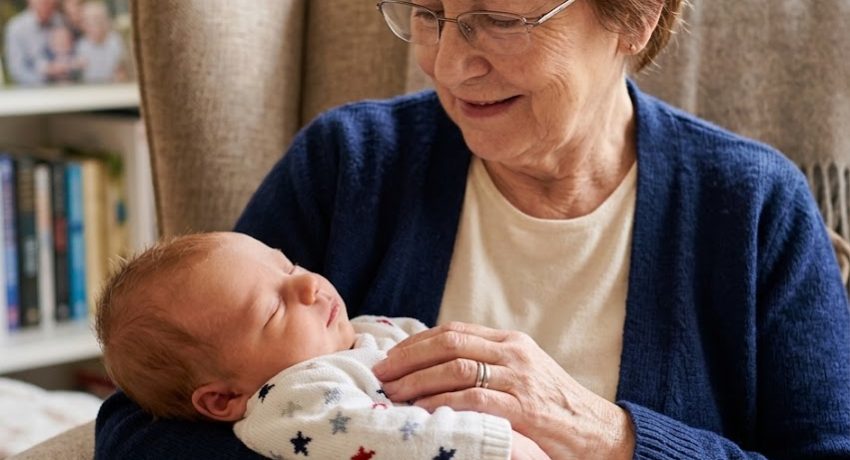
Nine months later, I held my daughter in my arms for the very first time.
Her name was Grace.
She was perfect.
Her tiny fingers looked unbelievably fragile. Her little face was red and tightly scrunched, with dark hair covering her head. The moment the nurse laid her against my chest, everything else in the room seemed to vanish.
I couldn’t hold back my tears.
Grace opened her eyes for just a few seconds.
That was enough.
Forty-two years after I had frozen those eggs, I had finally become a mother.
Taking her home scared me more than I had anticipated. I had prepared everything with care—the crib, dresser, bottles, diapers, and blankets—but none of that preparation could stop me from checking every few minutes to make certain she was still breathing.
That first night, I hardly slept.
The second night wasn’t much different.
I was drained, overwhelmed, frightened, and happier than I could possibly put into words.
Then, three days after Grace came home, someone knocked on my front door.
I was standing in the living room with Grace against my chest when the knocking came again.
I wasn’t expecting a visitor.
I slowly approached the door and looked through the peephole.
A woman was standing outside.
She appeared to be around forty, and her eyes were puffy from crying. Something about the way she stood immediately made me uncomfortable.
Grace shifted against me.
I opened the door only halfway.
The woman looked straight at me.
“Are you Margaret?”
“Yes.”
Her eyes instantly moved toward the baby.
“Was she born three days ago?”
My whole body went rigid.
“Who are you?”
She swallowed.
“The clinic contacted me yesterday after your daughter was born.”
I instinctively held Grace even closer.
“Why would the clinic contact you?”
Rather than answering, the woman reached inside her coat.
I immediately adjusted Grace higher against my chest.
She noticed.
“I’m not here to hurt you.”
Then she removed a folded envelope.
“My name is Ivanna. I’m forty-two.”
I stayed exactly where I was.
She extended the envelope toward me.
“This was sent by the clinic.”
“What does it say?”
Her lips trembled.
“I think you need to read it yourself.”
Every instinct told me to shut the door, lock it, and protect my daughter above everything else.
Then I noticed Ivanna’s hands.
They were shaking.
Whatever this situation was, she was terrified too.
“Come inside.”
She stepped in cautiously, her eyes repeatedly drawn toward Grace.
I noticed.
“Please don’t look at her like that.”
“I’m sorry.”
She quickly turned her gaze away.
I sat on the sofa with Grace held against me while Ivanna remained standing.
“Sit.”
She slowly lowered herself into the chair across from me.
I opened the envelope.
The first page contained formal medical and legal wording. I read the opening paragraph twice before reaching a sentence that made it feel as though the entire room had disappeared around me.
The fertility clinic had uncovered a possible error involving stored reproductive material.
My hands turned cold.
“What kind of mistake?”
Ivanna wiped her tears.
“Keep reading.”
Years earlier, she had frozen eggs at the same clinic. Her samples had been stored in the same facility as mine.
During an internal investigation launched after Grace’s birth, technicians discovered that identification numbers on two storage records did not correspond with the archived laboratory information.
One record was mine.
The other belonged to Ivanna.
I looked up.
“No.”
She said nothing.
“No. They used my egg.”
“That’s what everyone thought.”
“I was told it was mine.”
“So was I.”
Grace made a tiny noise against my chest, and I immediately looked down at her calm face.
My heart started racing.
“What are you actually telling me?”
Ivanna drew a slow breath.
“The clinic believes the egg used to create Grace may have been mine.”
For several moments, I couldn’t make sense of what I was hearing.
Every word individually was understandable.
Together, they sounded impossible.
“May have been?”
“They’re not certain yet.”
“Then why are you standing in my house?”
Her expression became tense.
“Because they called me yesterday.”
“And then you decided to come here?”
“I shouldn’t have.”
“You’re right.”
“I know.”
Her eyes filled with tears again.
“But after they told me a baby had been born, I couldn’t think straight.”
I suddenly stood up.
Grace stirred.
Ivanna stood as well.
“Sit down.”
She immediately did as I asked.
I moved toward the window because, all of a sudden, my legs felt too weak to hold me up.
For nine months, I had believed Grace had come from the final remaining piece of my younger self. I had imagined the thirty-three-year-old woman I once was reaching across forty-two years and finally giving me the child she had saved the possibility of having.
Now a stranger sat in my living room, telling me that belief might have been wrong.
“Did you know the clinic still had one of your eggs?”
Ivanna nodded.
“I knew there was one left.”
“Why didn’t you use it?”
Something shifted in her expression.
I immediately knew I had touched a painful subject.
“I tried.”
I turned to face her.
“My husband and I tried for years. We created several embryos, but none of them survived.”
Her voice softened.
“Then my husband died.”
I stayed silent.
“A car accident. Two years ago.”
“I’m sorry.”
“After that, I couldn’t make myself go back to the clinic.”
She lowered her eyes.
“I continued paying the storage fees because destroying that last egg felt like shutting a door I wasn’t prepared to close.”
Her words affected me more deeply than I expected.
I knew exactly what she meant.
“Yesterday, the clinic called and told me there could have been a mix-up. They said we would need DNA testing.”
“And they gave you my address?”
“No.”
I frowned.
“Then how did you find me?”
“They accidentally said your full name during the phone call.”
She looked embarrassed.
“I searched public records. I know I shouldn’t have.”
“You really shouldn’t have.”
“I know.”
Her voice broke.
“I didn’t come here to take your daughter.”
I looked at her.
“I never said you did.”
“You were thinking it.”
She was right.
“I just needed to know whether there really was a baby.”
She swallowed.
“Then you opened the door while holding her.”
I looked down at Grace. One tiny fist was resting against my shirt.
A powerful instinct to protect her surged through me.
“If the DNA test proves she’s biologically yours, what happens?”
Ivanna’s face turned pale.
“I don’t know.”
“Would you want custody?”
She didn’t respond right away.
That hesitation frightened me more than any direct answer could have.
“I asked you a question.”
“I know.”
At last, she looked straight into my eyes.
“I’ve wanted a child for most of my adult life.”
My throat tightened.
“So have I.”
“I know.”
“No, you don’t.”
Her expression fell.
“You’re right. I don’t know what your life has been like.”
I sat down again.
For a long moment, neither of us said anything.
Two women.
Two frozen eggs.
Two lives defined by years of waiting.
And one sleeping newborn between us.
“I’ve only had three days with her,” I whispered.
Ivanna looked over at Grace.
“I’ve had none.”
The words hurt.
I hated that they did.
I wanted desperately for Ivanna to be the villain. I wanted her to say something cruel or selfish so I could hate her without feeling guilty.
Instead, she looked completely shattered.
Grace suddenly began to fuss.
I stood and gently swayed her in my arms.
“It’s okay, sweetheart.”
Ivanna turned her face away, but I could see tears sliding down her cheeks.
Before I had time to reconsider, I asked,
“Do you want to hold her?”
Both of us seemed startled by the question.
Ivanna stared at me.
“Are you sure?”
“No.”
For a moment, she nearly smiled.
I did too.
I slowly walked toward her.
She extended her arms.
Very carefully, I placed Grace against her chest.
Ivanna’s entire body stiffened.
Then Grace relaxed.
Ivanna made a quiet sound and covered her mouth.
“She’s so tiny.”
“Seven pounds, two ounces.”
She smiled through her tears.
“Hello, Grace.”
I watched the two of them together.
Jealousy came first.
Then fear.
But after those feelings came something I never expected.
Compassion.
And somehow, that turned out to be the most difficult emotion of all.
The DNA test was carried out the next morning, and the clinic expedited the results.
Ivanna stayed at my house with me.
We hardly spoke.
Grace slept peacefully in her bassinet while the two of us waited for the phone to ring, knowing the call could potentially change all three of our lives.
When the call finally arrived, I placed it on speaker.
The doctor sounded tired.
“Margaret, Ivanna, we have the results.”
Without even thinking, I reached over and took Ivanna’s hand.
He went on.
“Grace is genetically related to Margaret.”
I closed my eyes.
For what seemed like the first time in an entire day, I could finally breathe again.
Ivanna tightened her grip on my hand.
Then the doctor continued.
“But there’s something else you both need to understand.”
I opened my eyes.
“The laboratory investigation has confirmed that Ivanna’s last remaining stored egg was accidentally discarded during that same incident.”
Ivanna became completely motionless.
The doctor started apologizing. He spoke about the investigation, liability, compensation, and possible legal remedies.
I barely registered his words.
Suddenly, everything became clear.
Ivanna hadn’t arrived at my home to take Grace from me.
She had come because the clinic had accidentally given her a reason to hope.
And now, less than forty-eight hours later, that same clinic had taken that hope from her once again.
When the call ended, Ivanna slowly got to her feet.
“I should leave.”
I looked over at Grace.
Then I looked back at her.
“Come back tomorrow.”
She stared at me.
“Why?”
“Because Grace is going to need people who love her.”
Ivanna started crying.
I did too.
She returned the next day.
Then she came back again the following week.
Months later, Grace recognized Ivanna’s voice.
Years afterward, Grace would learn the full, complicated story of how Ivanna became part of our lives.
Ivanna never became Grace’s mother.
That was my place.
But she became something neither of us could have imagined.
svg Family.
At seventy-five, I believed that finally becoming a mother would be the final extraordinary surprise life had in store for me.
I was mistaken.
Grace gave me something I had spent forty-two years waiting to experience.
Ivanna gave me something I had long since stopped expecting—a different kind of family and a future that was completely different from what I had pictured at thirty-three.
It was more unusual.
More complicated.
Much less certain.
And somehow, more complete than anything I could ever have planned.
For once, I felt thankful that life had completely disregarded the plans I had made.